 How-to
Why Local Flowers Last Longer Than Imported Ones
Quick Summary
Local flowers last longer because they spend far less time between harvest and your vase. Every extra day in transit shortens vase life through moisture loss, ethylene exposure and cold chain disruption. Local stems are often cut and delivered within a day or two, so they arrive firmer and fresher.
- Imported stems may be cut days or weeks before sale, while local stems can be delivered within a day or two.
- Long transit causes moisture loss, and stems may lose a significant share of their water weight within the first day or two.
- Ethylene gas in enclosed shipping boxes speeds petal drop and yellowing in imported flowers.
- Check stems, leaves and petals for firmness, bright color and bruising before you buy.
- Re-cut stems at a 45-degree angle under water and let them drink in cool water for at least two hours.
Table of Contents
- Why Freshness Starts at the Field, Not the Florist
- How Transit Time Shortens Vase Life
- Harvesting at Peak Bloom Versus Shipping Stage
- How Long Do Cut Flowers Last, and What Changes Their Lifespan
- How to Tell if Flowers Are Fresh Before You Buy
- Best Flowers for Long Vase Life
- How to Make Fresh Flowers Last Longer at Home
- Ordering Locally Grown Flowers From The Flower Cart
- Frequently Asked Questions
Why local flowers last longer comes down to one thing: how little time passes between the field and your vase. Every extra day between harvest and display shortens vase life, and the research backs that up. Still, many shoppers never see where their flowers came from, so they can't tell a fresh bouquet from one that spent a week in transit. This guide from The Flower Cart, Inc. explains what drives that difference and how to spot freshness before you buy. Once you have chosen your blooms, learn how to keep locally grown flowers fresh after you bring them home.
The first thing to know is that flower life starts before any florist touches the bloom. Cut flowers keep respiring and losing moisture after they leave the plant, so their clock is running from the moment they are picked. Local growers can often cut and deliver in a short window, which tends to help stems arrive in good condition.
Why Freshness Starts at the Field, Not the Florist
A florist can only protect a flower that arrives in good shape. Most of the decline happens during harvest, handling and transport, long before a designer touches the stems.
Consider the scale of the trade. Most flowers sold in the U.S. are imported, so many bouquets spend days in transit before they reach a shop. Local flowers skip most of that journey.
- Imported stems may be cut days or weeks before sale
- Local stems can be cut and delivered within a day or two
- Less handling means fewer bruised petals and stressed stems
The article points to a few concrete differences between imported and local stems:
| Factor | Imported flowers | Local flowers |
|---|---|---|
| Time from cut to sale | Days or weeks | A day or two |
| Handling | More packing and repacking | Less handling |
| Stem and petal condition | More bruising and crimping | Firmer stems, cleaner foliage |
How Transit Time Shortens Vase Life
Transit time is the biggest single factor in how long a bouquet lasts, and the damage happens through three linked mechanisms: moisture loss, ethylene exposure, and cold chain disruption. Understanding each one explains why a local stem can outlast an imported one by a week or more.
Moisture loss. A cut flower keeps respiring and transpiring after harvest, losing water through its leaves and petals faster than a stem can replace it once it is out of the ground. In long-distance transit, stems are typically packed dry or with only a damp sleeve, so they can lose a significant share of their water weight within the first day or two. That deficit is hard to reverse. Flowers that spend a long time in transit can struggle to fully rehydrate, and their vase life may be shortened before they reach the bucket.
Ethylene gas. Ethylene is a natural plant hormone that flowers, fruit, and even exhaust fumes release into the air. It accelerates aging: petals drop, buds fail to open, and leaves yellow. Imported flowers are exposed to more ethylene because they spend more time in enclosed boxes, trucks, and cargo holds alongside other produce. Local stems cut and delivered within a day or two simply accumulate less exposure. This is why a local bouquet often holds its petals longer even when both arrangements look identical on day one.
Cold chain disruption. Flowers are generally held at cool temperatures to slow respiration and water loss. But cold chain management is only as good as its weakest link. Every time a box moves from a cool cargo hold to a warm loading dock, condensation forms and stems can take up water unevenly or develop botrytis. Local growers who cut and deliver in a short window avoid most of these temperature swings entirely.
Watch out: A flower can look full and bright on the day it arrives and still have a short life ahead. Check the stems and leaves, not just the blooms, because the transit damage is often invisible until the flower collapses days later.
Shorter journeys also mean less physical handling. Every time a bunch is packed, unpacked, and repacked, petals bruise and stems crimp. Local flowers skip most of that journey, which is why they often arrive with firmer stems and cleaner foliage.
Harvesting at Peak Bloom Versus Shipping Stage
When a flower is cut matters as much as how far it travels. Growers who ship widely often harvest at an earlier stage so the stems survive the trip. Local growers can wait until the bloom is closer to its best.
Growers who ship widely often harvest at an earlier stage so the stems survive the trip, while local growers can wait until the bloom is closer to its best.
How Long Do Cut Flowers Last, and What Changes Their Lifespan
Most cut flowers last from about a week to two weeks in a vase, depending on the variety and how they are cared for. Demand for cut flowers continues to grow, which makes freshness more important.
Several factors change how long flowers last:
- Temperature: Cool storage slows respiration and water loss.
- Transit time: The longer the trip, the shorter the vase life.
- Water and stem care: Clean water and fresh cuts help stems drink.
- Indoor conditions: Heat, direct sun and fruit bowls nearby all shorten bloom life.
How to Tell if Flowers Are Fresh Before You Buy
You can check freshness before you pay. A few quick looks tell you a lot.
- Check the stems. They should be firm and upright, not limp or slimy.
- Look at the leaves. Bright green is good. Yellow or brown edges signal age.
- Inspect the petals. Look for bruising, browning or papery edges.
- Smell the bouquet. Fresh flowers have a clean scent. A sour or musty smell is a warning sign.
- Ask about harvest timing. A florist who knows when the flowers were cut can tell you how fresh they are.
If you are buying online, look for photos that show the actual stems and blooms, not just a styled shot. Learn how to trust online florist photos before you order. Read reviews that mention arrival condition.
Best Flowers for Long Vase Life
Some varieties hold up better than others, even when they are fresh. If you want the longest-lasting arrangement, choose sturdier blooms.
- Chrysanthemums: Long-lasting and forgiving of minor care lapses
- Carnations: Hold their shape and color for many days
- Alstroemeria: Stems stay sturdy and blooms open gradually
- Roses: Last well when bought at a tight bud stage
Delicate flowers like sweet peas and some lilies are beautiful but tend to fade faster. Mix them in for color, and anchor the bouquet with the sturdier stems.
How to Make Fresh Flowers Last Longer at Home
Good care at home can add days to a bouquet, but the biggest gains come from rehydrating stems properly, especially if they have traveled. For a more detailed and current guide, see these tips for fresh flower care. Most people trim and change water, yet skip the step that actually revives a thirsty flower: a deep, cool hydration reset.
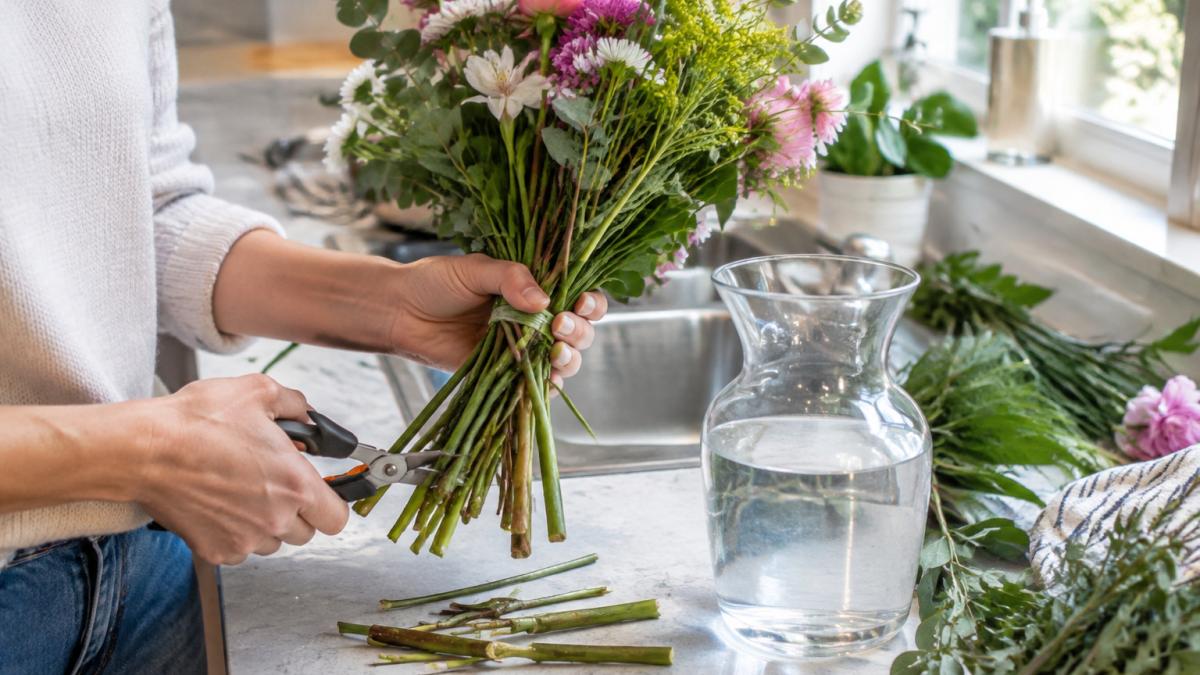
The rehydration reset for traveled flowers. If your flowers came from a supermarket or a long-distance shipment, they are likely suffering from air embolisms, tiny air bubbles that block the stem's water channels. To clear them:
- Fill a clean bucket with cool water, about 2 to 3 inches deep.
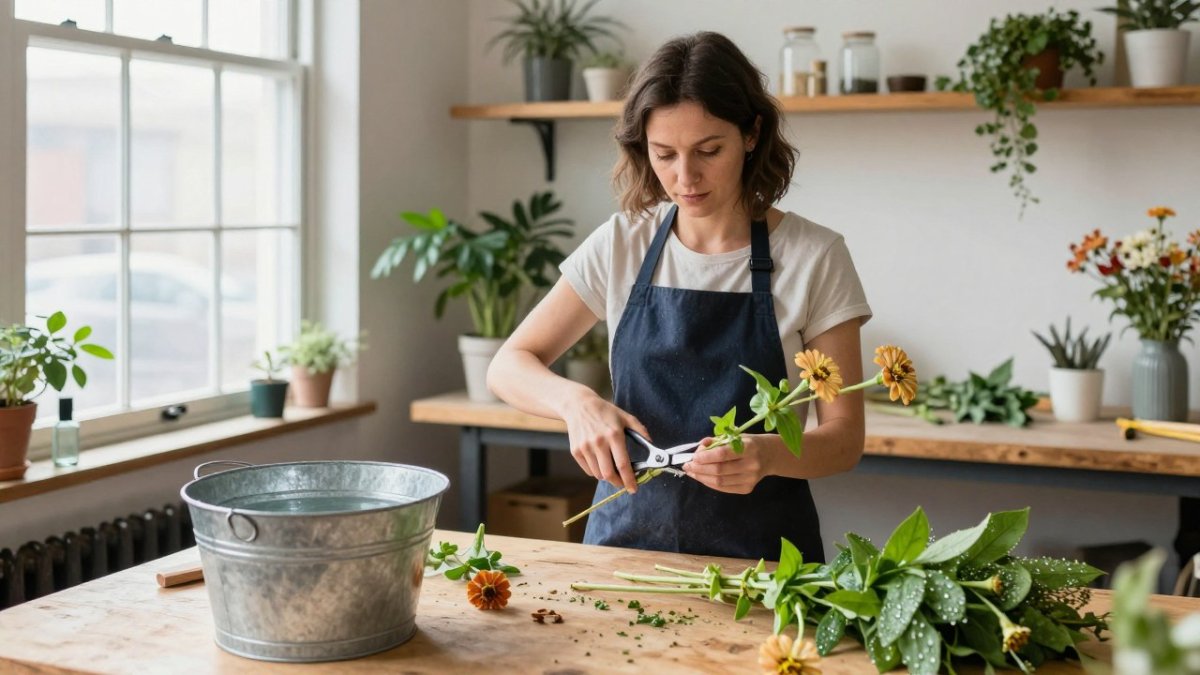
- Re-cut each stem at a 45-degree angle with a sharp knife or floral snips, removing at least an inch. Make the cut underwater if you can, which prevents new air from entering the stem.
- Strip any leaves that would sit below the waterline, since submerged foliage rots and clouds the water.
- Let the stems drink in a cool, dark spot for at least two hours, or overnight for very wilted flowers.
This deep hydration step can help extend the life of flowers that spent days in transit. Local flowers need less of it because they arrive hydrated, but even they benefit from a fresh cut and a cool drink.
Everyday care that actually moves the needle.
- Trim stems at an angle under cool water to help them drink
- Remove leaves that sit below the waterline
- Change the water every two days and rinse the vase with soap to kill bacteria
- Keep flowers away from heat, direct sun, and ripening fruit, which releases ethylene
- Re-cut stems every few days for the best uptake
- Use the flower food packet if provided; it contains sugar for energy and an acidifier to slow bacterial growth
Watch out: Home-brewed additives such as bleach or copper can damage stems if overused. A clean vase and fresh water are a simple, safe approach.
Many people skip the trim, but a fresh cut opens the stem's water channels again. Combined with a proper rehydration soak, it is one of the easiest ways to extend bloom life, whether your flowers came from a local farm or a long-haul shipment.
Ordering Locally Grown Flowers From The Flower Cart
The Flower Cart, Inc. has served the Baltimore community since 1961 and sources seasonal blooms from local Maryland farms. You can also compare Baltimore florists offering seasonal bouquet delivery. Shoppers who want fresh stems can order online for same-day delivery across Baltimore City and surrounding counties, or visit one of the two shop locations, including the one inside Johns Hopkins Hospital.
Pricing depends on the size of the arrangement, the season and the delivery details, so check the website for current prices or request a quote. If you need a large order for an event, contact the shop directly to talk through your needs. Our guide to ordering event floral designs walks you through planning ahead.
Ready to see what is in season? Browse the current collection and choose freshness you can count on.
Last Updated: November 4, 2026
Frequently Asked Questions
Is it better to order from a local florist?
Often, yes. A local florist can source blooms from nearby farms, which typically means shorter transit time between harvest and delivery. Less time in transit means less moisture loss and less stress on the stems, which helps flowers hold their petals longer. Local florists can also advise on which varieties perform well in your climate and season. The Flower Cart sources seasonal blooms from Maryland farms and offers same-day delivery in Baltimore City and surrounding counties. Pricing depends on quantity, delivery date, and arrangement style, so check the website for current prices or request a quote.
How can you tell if cut flowers are fresh?
Look at the stems first. Firm, upright stems with healthy green color usually indicate fresh flowers. Check the petals for firmness and even color, and avoid blooms with browning edges or bruising. Leaves should be green and free of yellowing or slime. Gently touch a bud: fresh buds feel firm, while soft or shriveled buds suggest the flower is past its best. Lift the bouquet slightly and check the base for any sign of decay or a sour smell from the water, which can indicate bacterial growth.
How long do cut flowers last?
Most cut flowers last roughly one to two weeks with proper care, though lifespan varies by variety. Cool storage slows respiration and transpiration, which can extend vase life. Factors such as transit time, ambient temperature, exposure to ethylene gas from ripening fruit, and how the stems were conditioned all affect how long a bouquet stays fresh. Trimming stems and changing the water regularly makes a noticeable difference.