 How-to
Do Locally Sourced Flowers Really Last Longer?
Quick Summary
Locally sourced flowers may last longer because shorter transit time helps them arrive fresher, but this is not guaranteed. Variety, harvest stage and home care matter just as much, and some local varieties are naturally short-lived.
- Shorter transit can help blooms arrive fresher
- Some local varieties are naturally short-lived
- Harvest stage affects how open and full the bloom is
- Care at home has a big effect on how long flowers last
- Change vase water every two days and recut stems about an inch
Table of Contents
- Why Locally Sourced Flowers May Last Longer Than Imported Ones
- How Transit Time and Harvest Timing Affect Freshness
- How Long Do Fresh-Cut Flowers Last, by Variety?
- Flowers That Last the Longest in a Vase
- Factors That Can Outweigh Local Sourcing
- How to Make Flowers Last Longer at Home
- How to Tell If Flowers Are Fresh Before You Buy or Arrange
- Choosing Your Next Arrangement With Vase Life in Mind
- Frequently Asked Questions
Why Locally Sourced Flowers May Last Longer Than Imported Ones
Locally sourced flowers may last longer, but the answer is not a guaranteed yes. Read the deeper explanation of why local flowers last longer. Shorter travel time can help, and a growing body of trade commentary supports that idea.
At The Flower Cart, Inc., we source seasonal blooms from Maryland farms.
The main argument is about transit. Flowers that travel long distances spend more time in trucks, planes and storage. Local growers can often cut and deliver the same day or within a few days.
Charmed Valley Farm's explanation of why local flowers last longer than imported ones
Local origin alone does not guarantee a longer vase life, though. Many locally grown flowers are varieties that do not ship well or have shorter vase lives.
American Society for Horticultural Science article on the market potential for specialty cultivars
Here is the practical takeaway. Local sourcing can help with freshness, but it is not a guarantee. Variety, harvest stage and how the flower is cared for at home matter just as much.
- Shorter transit can help blooms arrive fresher
- Some local varieties are naturally short-lived
- Care at home has a big effect on how long flowers last
How Transit Time and Harvest Timing Affect Freshness
Transit time and harvest timing both shape how fresh a flower is when you bring it home. Less time on the road usually means less stress on the stem. Cutting at the right stage also matters, because a flower picked too early may never fully open.
Long trips, heat and rough handling can all shorten the window in which a flower stays fresh.
Harvest timing works alongside transit. Growers choose when to cut based on the variety and the bloom stage they want.
Washington University in St. Louis guide to sustainable flowers and shorter travel distances
Ask your florist when the flowers were cut.
- Shorter trips reduce time without water and in transit
- Harvest stage affects how open and full the bloom is
- Seasonal flowers are often cut closer to peak condition
How Long Do Fresh-Cut Flowers Last, by Variety?
Most fresh-cut flowers last somewhere between a few days and two weeks, depending on the variety and care. The useful question is how long a specific type tends to hold up when it is cut at the right stage and conditioned well.
| Flower type | Typical vase life | What drives the range |
|---|---|---|
| Chrysanthemum | 10-14 days | Dense blooms, strong stems, tolerant of warm rooms |
| Carnation | 7-14 days | Sturdy petals, but sensitive to dirty water and ethylene |
| Alstroemeria | 7-14 days | Long stems, many buds that open in sequence |
| Lily | 7-10 days | Buds open over time; remove anthers to slow staining and decline |
| Rose (garden) | 5-7 days | Soft petals, opens fast in warmth |
| Rose (hybrid tea) | 7-10 days | Firmer petals, but sensitive to air in the stem |
| Tulip | 5-7 days | Continues to grow and open; heat shortens display |
| Hydrangea | 4-7 days | High water demand; wilts fast if stems are not recut |
| Sunflower | 5-7 days | Heavy heads, high water use, sensitive to bacteria |
| Zinnia | 5-7 days | Thin stems and soft petals; benefits from frequent recutting |
| Dahlia | 4-6 days | Hollow stems and soft petals; needs cool water and clean cuts |
| Ranunculus | 5-7 days | Many thin petals; opens quickly in warmth |
Typical vase life
Season shifts these numbers. A tulip cut in cool spring weather often outlasts one forced in a warm greenhouse, and a chrysanthemum grown in its natural fall season tends to hold longer than an out-of-season stem.
Watch out: a tight bud is not automatically a longer-lasting flower. Some varieties, such as certain garden roses and dahlias, may never open properly if cut too immature, so ask whether the buds you are buying are at a stage that will open in the vase.
Use the chart as a planning tool. If you want a bouquet for a two-week stretch, build around chrysanthemums, carnations and alstroemeria. If you want a specific look for a weekend event, choose tulips, dahlias or garden roses and plan to enjoy them at their peak rather than expecting a long run.
- Sturdy varieties often last longer in a vase
- Delicate varieties may open and fade quickly
- Expect a range, not a single number, for most flowers
- Season and harvest stage can move a flower up or down within its range
Flowers That Last the Longest in a Vase
Some flowers are known for holding up well in a vase. If you want a bouquet that stays fresh for more days, these types are a good place to start. Results still vary with care and season.
Chrysanthemums are often one of the longest lasting cut flowers. Their dense blooms handle handling and warm rooms well. Carnations are another sturdy choice, holding color and shape for a long stretch when kept in clean water.
Alstroemeria, lilies and certain hydrangea types also tend to hold up well. Many people choose them for events and gifts because they keep their shape for several days. Pick firm buds that show some color but have not fully opened.
We recommend asking your florist which blooms are at peak freshness this week. The best choice often depends on what the farms are cutting right now.
- Chrysanthemums: dense, sturdy blooms
- Carnations: long-lasting color and shape
- Alstroemeria and lilies: steady performers in a vase
Factors That Can Outweigh Local Sourcing
Local sourcing helps, but other factors can matter more. A flower from a nearby farm can still fade fast if it is handled poorly, kept in a hot spot or never given fresh water.
Variety is the first filter. Some flowers are simply not built for long vase life, while others are naturally sturdier.
Harvest maturity is the second. A stem cut too tight may never open; a stem cut too open has already spent part of its display before you get it.
Cold-chain handling is the third. Flowers that are cooled quickly after cutting and kept cool through delivery hold up better than flowers that sit warm. Ask how the flowers were stored before you buy them.
Home care is the fourth and most controllable. Dirty water, dry stems and warm spots undo the advantages of variety and handling within a day or two.
Here is a freshness checklist you can use at the counter or the farm stand:
- Stems: firm, upright and not bending at the neck; the cut end should look clean, not brown or mushy.
- Leaves: bright, with no yellowing or black spots, especially below the waterline.
- Buds: showing color and just starting to open.
- Water: clear, not cloudy or smelly.
A bouquet that looks full and open may have fewer days left. If you need longevity, consider tighter buds of a sturdy variety.
- Variety sets the maximum vase life
- Harvest stage and cold-chain handling decide how much you get
- Home care decides how long you keep it
- Use the stem, leaf, bud and water checklist before you buy
How to Make Flowers Last Longer at Home
Good home care can help flowers last longer. Start with clean tools and a clean vase. Bacteria in dirty water speeds wilting, so wash the vase with soap and rinse it well before you arrange.
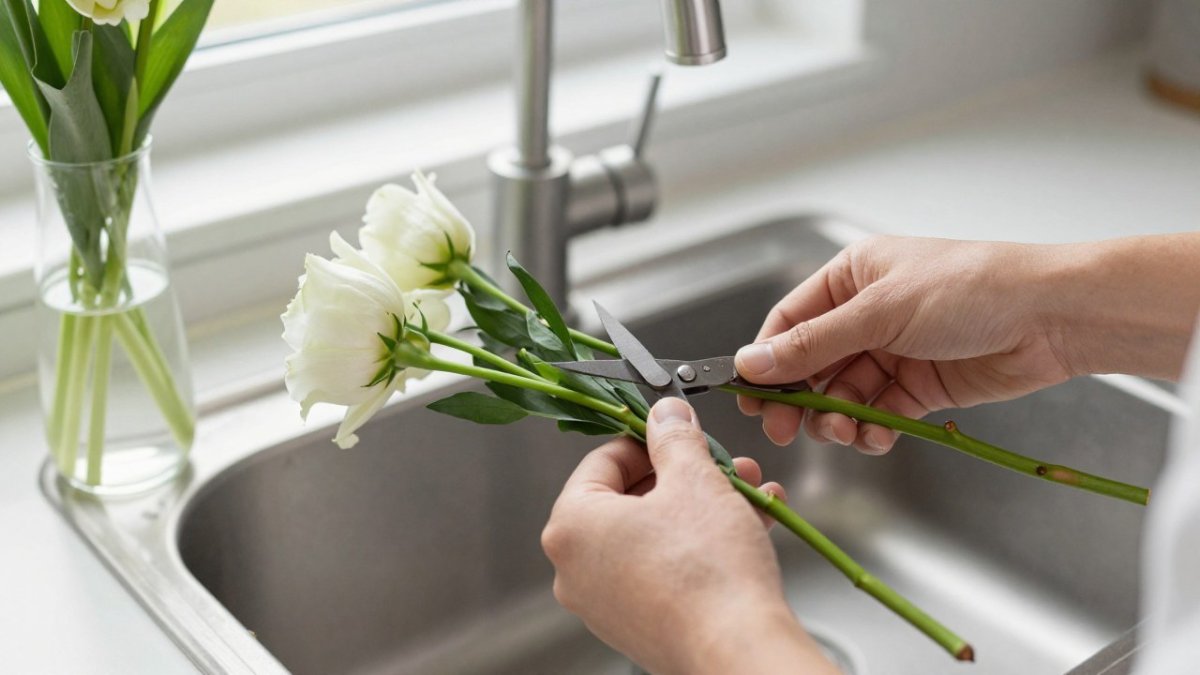
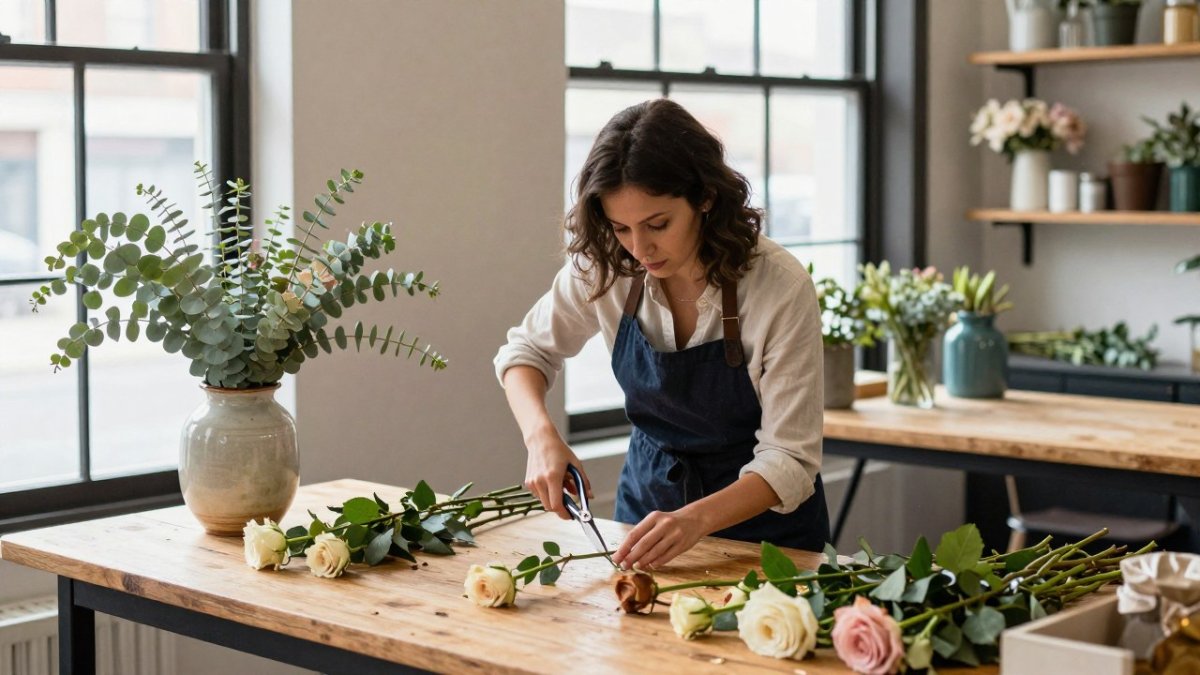
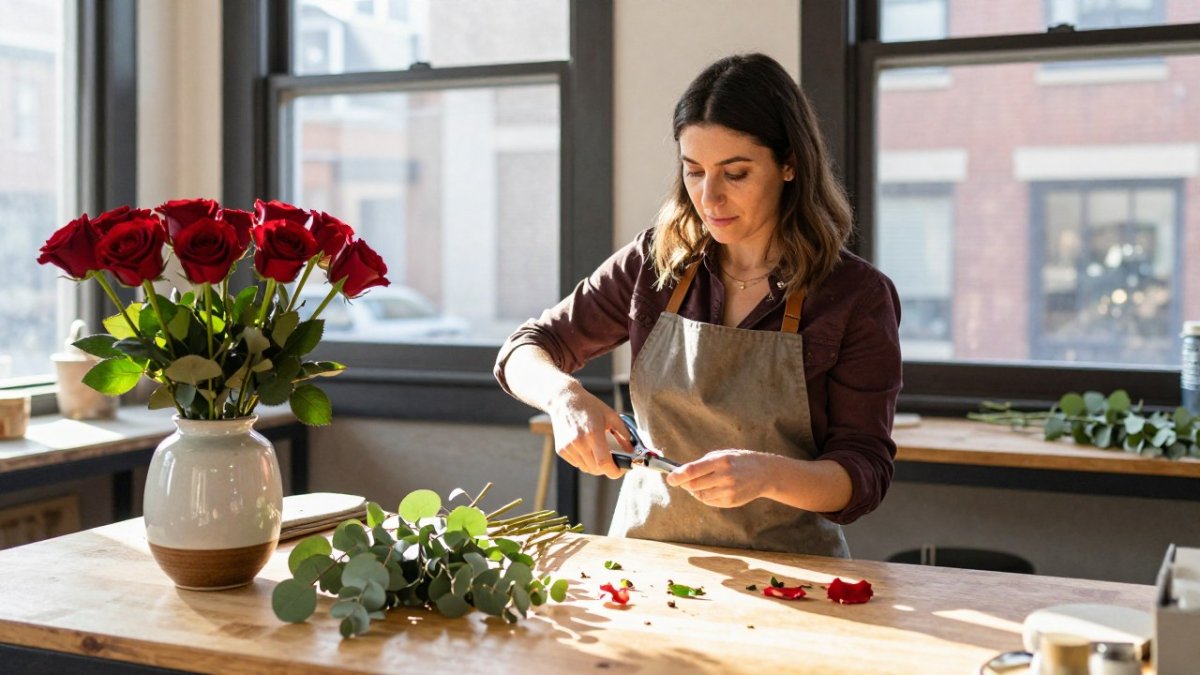
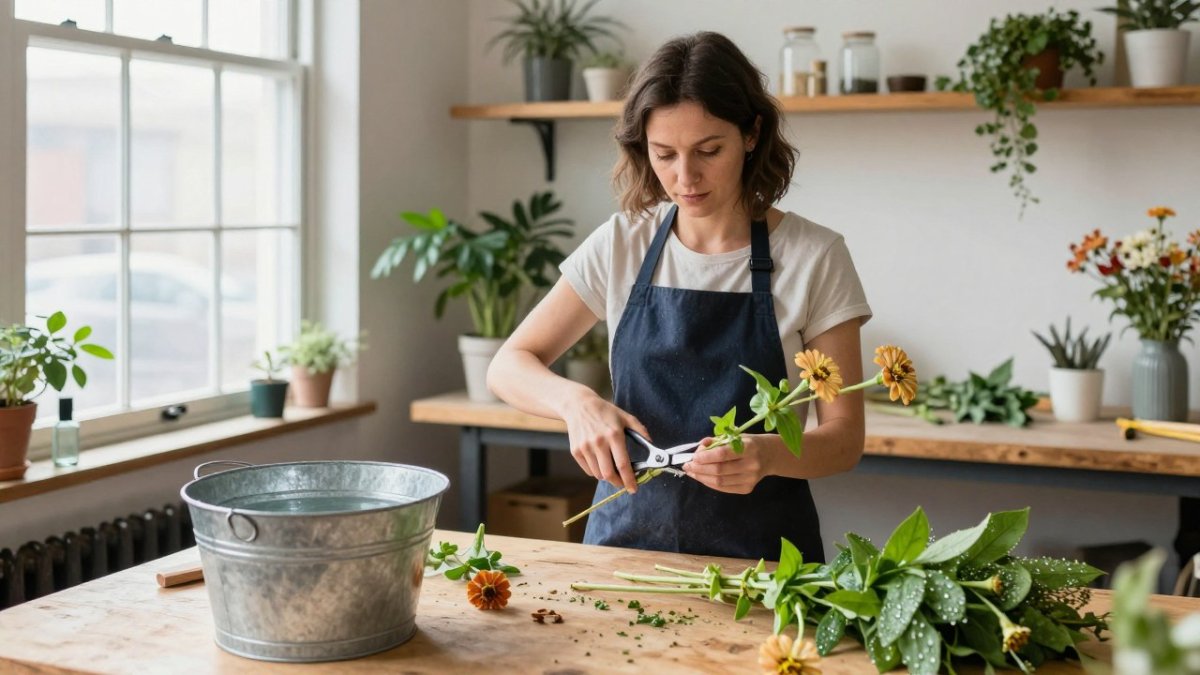
Trim stems at an angle with sharp scissors. Cut about an inch from the bottom to help water move up the stem. Remove any leaves that would sit below the waterline, because they rot and foul the water.
Fill the vase with cool, fresh water and add flower food if your florist provides it. Change the water every two days and recut the stems each time.
Use this simple routine:
- Day 1: Wash the vase, trim stems, remove low leaves, add fresh water and food
- Every 2 days: Change the water and recut stems about an inch
- Daily: Check for wilting or fallen petals and remove them
- Keep the bouquet cool, out of direct sun and away from fruit
Our guide to keeping locally grown flowers fresh
For more specific guidance on locally grown blooms, see our guide on how to keep locally grown flowers fresh. For everyday care steps, you can also read our tips for fresh flower care.
Hands trimming the stems of fresh cut flowers at a kitchen sink, with a clean glass vase of water nearby | section:How to Make Flowers Last Longer at Home
How to Tell If Flowers Are Fresh Before You Buy or Arrange
Checking freshness before you buy saves disappointment later. Look for firm stems, bright leaves and blooms that show color without looking tired. Avoid flowers with brown edges, limp petals or a strong sour smell.
Give flowers a gentle tug in the bucket. Stems that feel soft or bend easily may already be past their best. Check the base of the stem for slime or rot, which signals older or poorly cared-for flowers.
When you get home, inspect each bloom before you arrange. Remove any damaged petals and trim stems right away. Blooms that stay firm after a day in water are usually in good shape.
Learning to judge photos and listings also helps. Our article on how to trust online florist photos before you order explains what to look for when choosing flowers online.
- Firm stems and bright leaves signal good health
- Brown edges, limp petals and sour smells are warning signs
- Trim and inspect right after you bring flowers home
Choosing Your Next Arrangement With Vase Life in Mind
Choose your next arrangement with both freshness and purpose in mind. Ask about variety, bloom stage and when the flowers were cut. Those details tell you more about vase life than a label alone.
If you want a bouquet that lasts, pick sturdy varieties and ask for tight buds that are just starting to open. For a display that looks full right away, choose blooms that are already partly open and plan to enjoy them sooner.
If you are comparing local florists and national delivery sites, consider how each one handles freshness, care and timing. Our guide on local florist vs national delivery sites can help you weigh the options.
We are glad to help you pick the right flowers for your space and your timing. Browse what is in season on our website, or ask us which arrangements will hold up best for your event. Shop The Flower Cart, Inc. today for fresh, locally sourced blooms in Baltimore.
Frequently Asked Questions
Do locally sourced flowers last longer than imported flowers?
Local flowers often have a shorter transit time, which can help them stay fresh. However, the research does not show a controlled comparison proving local flowers always last longer. Variety, harvest maturity and home care have a major effect on vase life. Some locally grown varieties do not ship well and have naturally shorter vase lives, so origin alone is not a guarantee. Checking freshness at purchase and caring for stems promptly will do more for longevity than sourcing location by itself.
How long should fresh-cut flowers last in a vase?
Vase life varies widely by species, variety and season, so there is no single answer. Many fresh-cut flowers last several days, and some last one to two weeks with good care. Daily fresh water, clean vases, and trimmed stems help flowers reach the upper end of their typical range. Ask your florist about the expected vase life of a specific arrangement before you buy it.
How can you tell if cut flowers are fresh?
Look for firm stems, crisp leaves and blooms that are opening rather than already fully open or drooping. Avoid flowers with brown spots, bent necks or wilted petals. Give the stems a gentle tug to check that they are firmly attached and not slimy near the base. Buying from a florist who can tell you when the flowers were harvested makes it easier to judge freshness.
Which cut flowers last the longest in a vase?
Varieties with sturdy petals and strong stems generally have longer vase lives than delicate, thin-petaled blooms. Longevity also depends on whether the flower was harvested at the right maturity and how it was conditioned. Because results vary by variety and season, ask your florist which flowers in an arrangement are expected to last longest and plan to refresh the more fragile blooms sooner.