 How-to
Why Local Florist Arrangements Cost More Than Grocery Flowers
Last Updated: November 21, 2026
Quick Summary
Local florist arrangements cost more because the price covers the flowers, the skill, the shop, and the delivery, not just the stems. Florists design each arrangement by hand, and their costs include wholesale stems that shift with season, trained design labor, shop overhead, cold storage, and delivery fees.
- Grocery bouquets are mass-produced and sold in bulk, while florist arrangements are designed one piece at a time.
- Wholesale stem prices rise and fall with season and supply, and the arrangement's size also changes the price.
- Compare total delivered cost, including delivery fees and service charges, rather than just the bouquet price.
- Grocery bouquets suit casual gifts, while florist arrangements suit sympathy work, events, and presentation-focused gifts.
- Choose seasonal flowers, pick a smaller arrangement if needed, and compare the full price before ordering.
Table of Contents
- What Goes Into the Price of a Florist Arrangement
- Wholesale Stem Costs and Seasonal Availability
- Design Labor, Skill, and Arrangement Size
- Shop Overhead, Cold Storage, and Keeping Flowers Fresh
- Local Florist vs Grocery Store Flowers: A Fair Comparison
- Flower Delivery Fees and What They Cover
- How to Save Money on Flowers Without Sacrificing Quality
- Booking Your Arrangement With The Flower Cart, Inc.
- Frequently Asked Questions
What Goes Into the Price of a Florist Arrangement
Why does a bouquet from a local florist often cost more than the same flowers at the grocery store? The short answer is that you are paying for the flowers, the skill, the shop, and the delivery, not just the stems. A grocery bouquet is mass-produced and sold in bulk, while local florist arrangements are designed one piece at a time.
At The Flower Cart, Inc., we want shoppers to understand what sits behind each price tag. The main cost drivers are:
- Wholesale flower costs that rise and fall with season and supply
- Design labor from trained florists who build each arrangement by hand
- Shop overhead such as rent, utilities, and staff wages
- Cold storage to keep blooms fresh until they leave the shop
- Delivery fees for drivers, vehicles, and fuel
Each one adds to the final price. Pricing depends on quantity, dates, and delivery, so the best way to see your exact cost is to check current pricing on our website or request a quote.
Wholesale Stem Costs and Seasonal Availability
Flowers are a perishable product bought in limited supply. A florist buys stems from wholesalers, and the price of each stem changes with the season. Roses and other popular varieties cost more when demand is high or supply is short.
Local sourcing adds another layer. We source seasonal, locally grown blooms from Maryland farms. Seasonal availability affects which blooms can be offered and their cost.
Research from North Carolina State University study on consumer floral preferences found that shoppers value roses highly while caring less about chrysanthemums. Those preferences shape which flowers florists stock and how much they charge for them.
Design Labor, Skill, and Arrangement Size
Good design takes time and training.
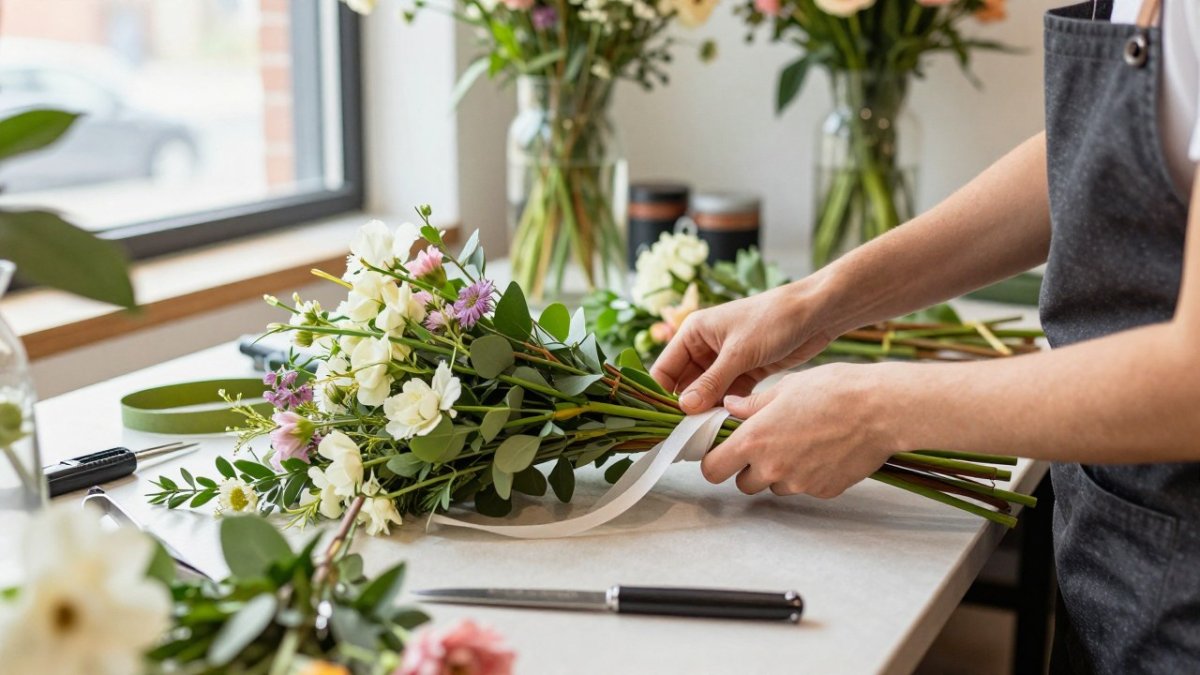
Arrangement size also changes the price. A larger arrangement uses more stems, more greenery, more vases or wrapping, and more time. A custom sympathy piece or event design can take much longer than a standard bouquet.
!A florist's hands shaping a hand-tied bouquet at a workbench covered in fresh stems, ribbon, and floral tools in a bright Baltimore shop
Shop Overhead, Cold Storage, and Keeping Flowers Fresh
A local florist pays for a physical shop. Rent, utilities, insurance, and staff wages all have to be covered by sales. Those costs do not disappear when business is slow.
Local Florist vs Grocery Store Flowers: A Fair Comparison
A fair comparison starts with the same question on both sides: how many stems are you actually getting, how fresh are they, and what does the total cost look like once delivery and service charges are included? For a side-by-side look at how a local florist stacks up against national delivery sites, read which option fits your order. Most price arguments break down because shoppers compare a florist's designed arrangement against a grocery bunch that was never meant to be the same product.
Stem count and volume. Grocery bouquets are typically sold as a single wrapped bunch or a pre-made mixed bunch, often priced per bunch rather than per stem. A florist arrangement is built to a recipe: a set number of focal stems, secondary blooms, filler, and greenery, sized to a vase or container. Two bouquets can look similar in a photo while one holds noticeably more stems and greenery. Ask each seller for the stem count or the recipe, not just the photo. Once you have your flowers, you can learn how to keep locally grown flowers fresh for longer.
Freshness and vase life. Vase life depends on the variety and on care at home, so treat any specific day count as a range, not a promise. To see why locally grown blooms can hold up differently than imported ones, read why local flowers last longer.
Design and substitutions. A grocery bunch is usually a fixed mix; what you see is what you get. A florist arrangement is designed to a color palette and shape, which means the florist may substitute a bloom when a variety is short or out of season.
Total delivered cost. Compare the full checkout, not the bouquet price. A grocery bouquet may carry no delivery fee if you pick it up, but a florist delivery fee covers a driver, fuel, routing, and handling. A wire service often adds a service charge on top of the arrangement price and the delivery fee. The honest comparison is: same occasion, same size, delivered to the same address, total price out the door.
When the grocery option wins. For a casual hostess gift or a bunch for your own kitchen table, a grocery bouquet can be the sensible buy. You are paying mostly for stems and convenience, not design labor.
When the florist option wins. For sympathy work, event pieces, hospital and funeral-home deliveries, and gifts where presentation matters, the design labor, conditioning, and delivery handling are the product. That is the gap the price reflects.
Watch out: a low bouquet price can hide a higher total once delivery, service charges, and a smaller stem count are factored in, so always price the delivered version before deciding which option is cheaper.
Here is how the two options compare on the factors that usually decide the price.
| Factor | Grocery bouquet | Local florist arrangement |
|---|---|---|
| Stem count | Fixed bunch, often priced per bunch | Built to a recipe sized to a vase |
| Substitutions | What you see is what you get | Florist may substitute a bloom |
| Design | Usually a fixed mix | Designed to a color palette and shape |
| Delivery | Often no fee if you pick up | Fee covers driver, fuel, and handling |
| Best for | Casual gifts, your own table | Sympathy, events, presentation-focused gifts |
Flower Delivery Fees and What They Cover
A delivery fee is not part of the arrangement price, and mixing the two is the most common source of checkout surprise. The arrangement price pays for stems, design labor, materials, and shop overhead. The delivery fee pays for the separate job of getting the finished piece from the shop to the recipient in good condition.
What the fee actually covers. Delivery fees depend on your address, timing, and order details. Ask about the delivery fee for your location when you request a quote.
Delivery fee vs. service charge. Read the checkout breakdown line by line so you know which charges apply to your order.
Confirm the full delivered total before you approve the order.
How to Save Money on Flowers Without Sacrificing Quality
You can often lower the cost of flowers without losing quality. A few simple choices help:
- Choose seasonal flowers that are locally available
- Pick a smaller arrangement if a full design is more than you need
- Compare the total price including delivery, not just the bouquet
Before you order flowers online or in person, check the shop's reviews and make sure the business is consistent in its quality. For a checklist of what to know before ordering flowers online or in person, see our guide.
Booking Your Arrangement With The Flower Cart, Inc.
Local florist arrangements cost more because they reflect real flowers, real skill, and real service. The Flower Cart, Inc. has served the Baltimore community since 1961.
Visit our website to see current pricing or request a quote. SHOP NOW.
Frequently Asked Questions
How much do floral arrangements usually cost?
Florist arrangement prices vary widely based on stem count, flower variety, season, arrangement size, and design style. Pricing depends on quantity, dates, and delivery, so The Flower Cart, Inc. recommends checking the website for current prices or requesting a quote for your specific order.
Is it cheaper to call a local florist or order online?
The answer depends on what you are comparing. Online marketplaces often add service and delivery fees on top of the arrangement price, while local florists set their own pricing that includes design work and shop costs. At The Flower Cart, Inc., arrangements are handcrafted by our designers, and our delivery pricing depends on your location and timing. Comparing the total cost, including fees, gives you the clearest picture.
Are grocery store flowers cheaper than florist flowers?
Grocery store bouquets are often lower priced because they are usually simpler, with fewer stems and less custom design work. At The Flower Cart, Inc., we source seasonal blooms from local Maryland farms and guarantee our flowers and plants.
Does flower delivery add much to the total cost?
Delivery adds a fee, and the amount depends on distance, timing, and order details. The Flower Cart, Inc. offers same-day delivery throughout Baltimore City and surrounding counties. Ask about the delivery fee for your address when you request a quote, and compare the total with any alternatives before you order.