 How-to
How to Keep Locally Grown Flowers Fresh
Last Updated: October 23, 2026
Quick Summary
To keep locally grown flowers fresh, change vase water every two to three days, recut stems at a 45-degree angle, remove lower leaves, and place flowers in a clean vase away from heat and direct sunlight. Locally grown flowers last seven to fourteen days when properly cared for, often outlasting imported blooms because they arrive fresher without shipping stress.
- Change vase water every two to three days, or every two days in warm environments above 75 degrees.
- Recut stems at a 45-degree angle and remove all leaves that would sit below the waterline.
- Place arrangements in cool, bright, indirect light away from radiators, heating vents, and ripening fruit.
- Most cut flowers last seven to fourteen days, with locally grown varieties often lasting longer than shipped flowers.
- Use commercial flower food at full label rate, or rely on plain cool water with frequent changes if no packet is available.
Table of Contents
- Why Locally Grown Flowers Need Different Care
- How Often to Change Flower Water
- Essential Steps to Keep Locally Grown Flowers Fresh
- Best Flower Food for Fresh-Cut Flowers
- How Long Do Cut Flowers Last
- How to Make Cut Flowers Last Longer
- Seasonal and Variety-Specific Care Tips
- Frequently Asked Questions
Why Locally Grown Flowers Need Different Care
Locally grown flowers are different from the imported blooms you might find at mass-market retailers.
The advantage is real: local flowers arrive in better condition. The challenge is that they're also more delicate. They haven't been treated with the heavy-duty preservatives and conditioning agents that shipped flowers receive during transit.
Locally grown flowers also vary by season. Spring tulips behave differently than summer roses or fall dahlias. Each variety has its own water needs, sensitivity to temperature, and vase life.
How Often to Change Flower Water
Change your vase water every two to three days. This is the single most important maintenance step for keeping flowers fresh.
Here's why: bacteria and debris accumulate in the water. According to University of Illinois Extension guidance on extending vase life, changing water regularly is one of the most effective ways to extend the life of your arrangement.
When you change the water, rinse the vase completely. Use cool, clean water. Never reuse old water or add it to fresh water.
For very warm environments, consider changing water every two days instead of three. Heat speeds up bacterial growth. Cold rooms allow you to stretch to three days comfortably.
Essential Steps to Keep Locally Grown Flowers Fresh
Step 1: Start with a Clean Vase
A clean vase is non-negotiable. Bacteria in the vase will kill flowers faster than anything else.
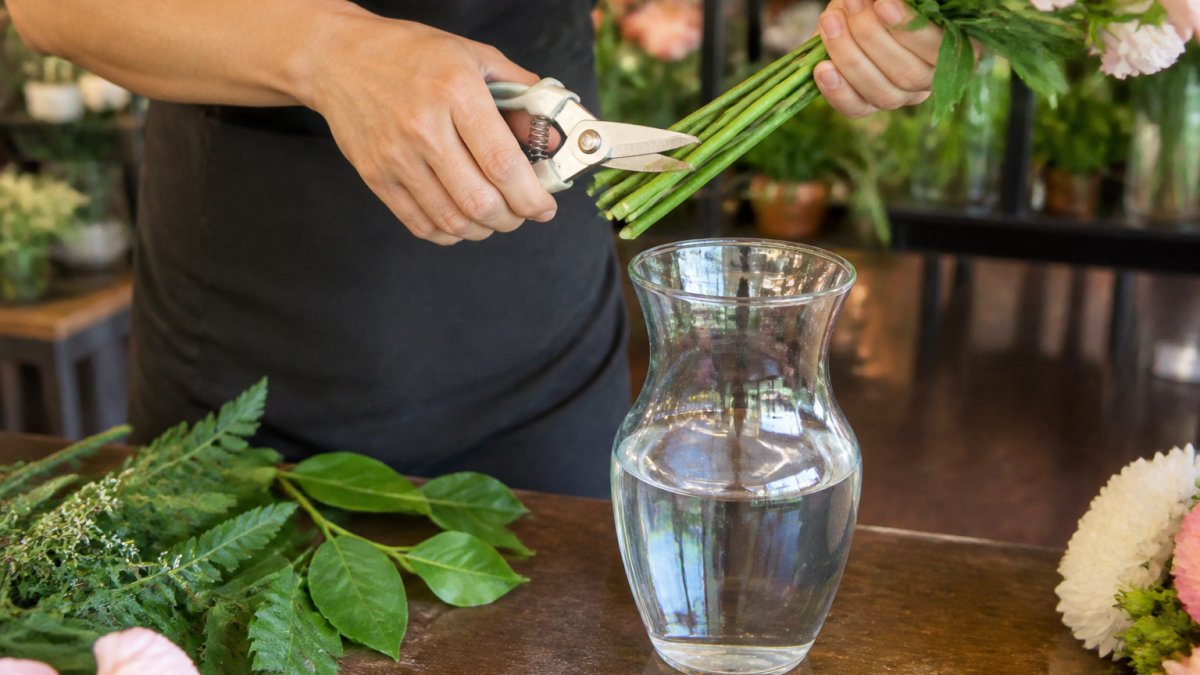
Before arranging, wash the vase with hot water and a brush. Scrub the inside thoroughly, especially the bottom where debris collects. Rinse completely with cool, clean water.
Some people use a tiny amount of bleach (one-quarter teaspoon per gallon of water) to sanitize. This works, but it's optional.
Step 2: Recut Stems at an Angle
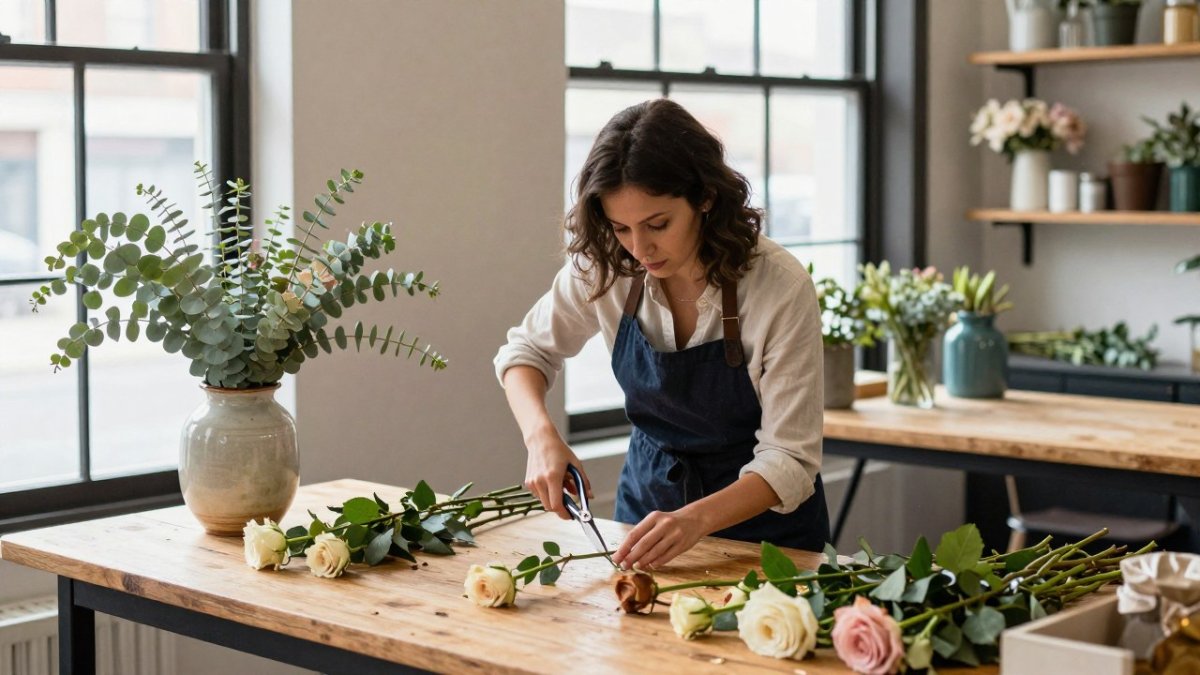
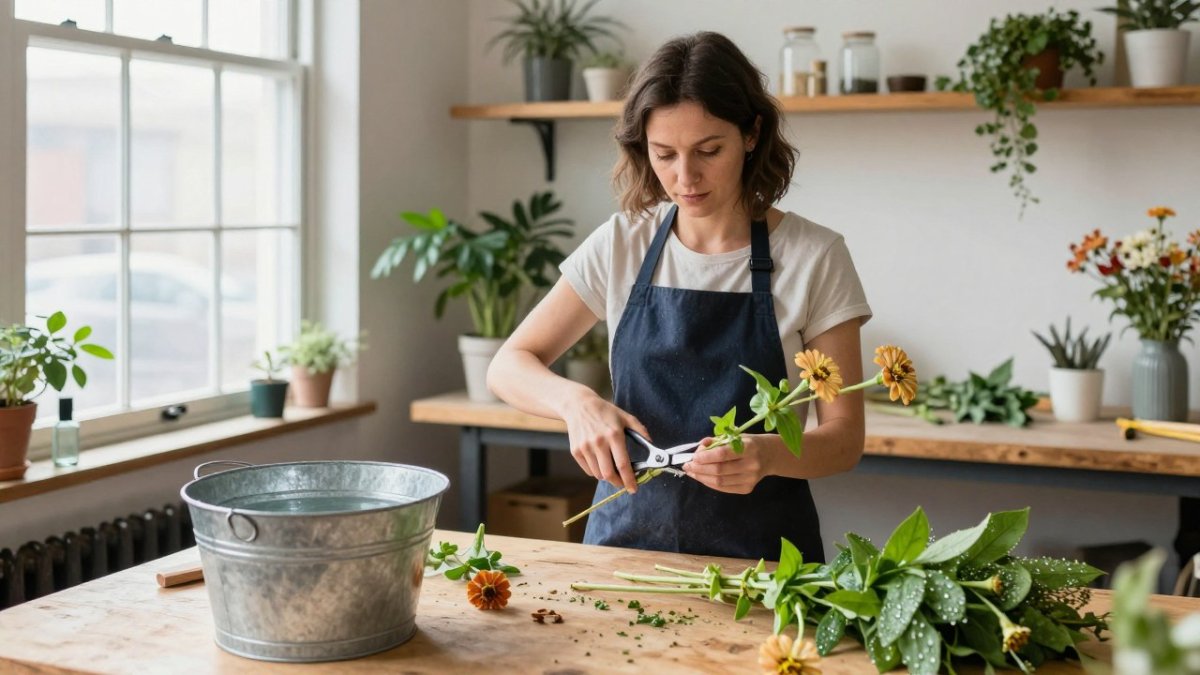
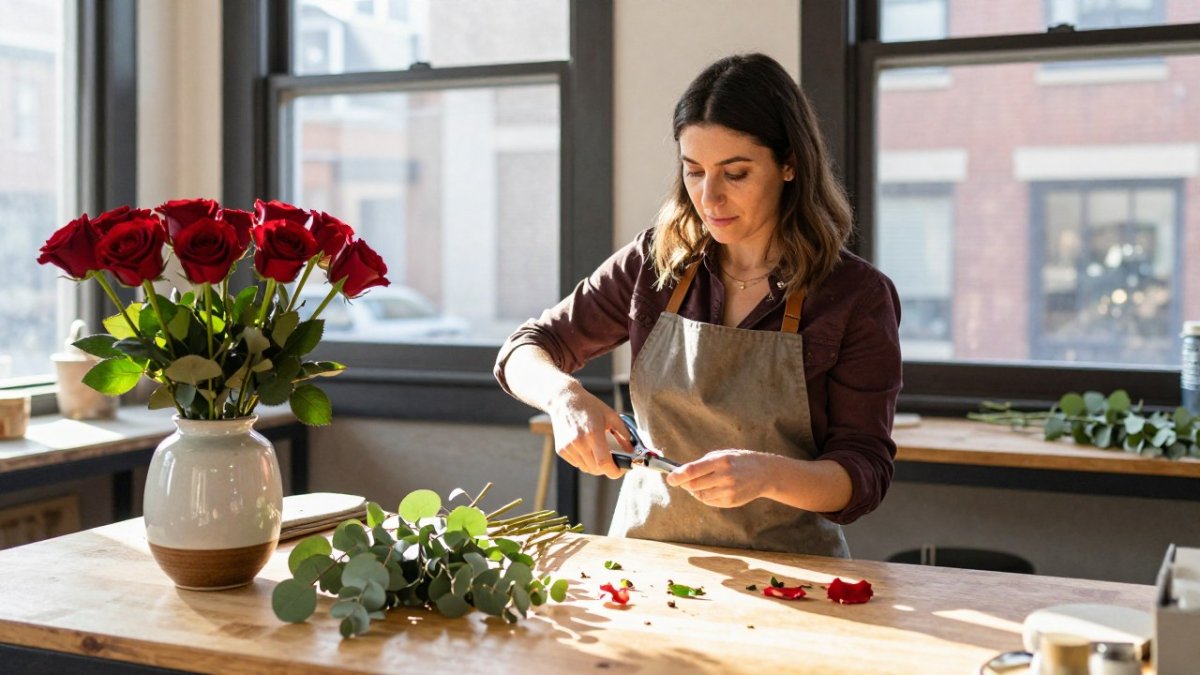
Cut stems at a 45-degree angle using sharp scissors or a knife. Never use dull tools.
Cut about one inch off the bottom of each stem. If flowers have been sitting for a few hours, cut more.
Angle cuts matter because they increase the surface area for water absorption. A flat cut sits flush against the vase bottom and blocks water uptake.
Cut stems under running water when possible. This prevents air from entering the stem, which can block water flow.
Step 3: Remove Lower Leaves
Strip all leaves that would sit below the waterline. Leaves underwater rot quickly and release bacteria into the water.
Check each stem carefully. Remove any foliage within two inches of the bottom. These leaves will be submerged and will decay. Dead leaves create the perfect environment for bacterial growth.
Keep leaves on the upper portions of stems. They help the flower absorb nutrients and stay hydrated. You only remove the ones that touch water.
Step 4: Arrange and Position Properly
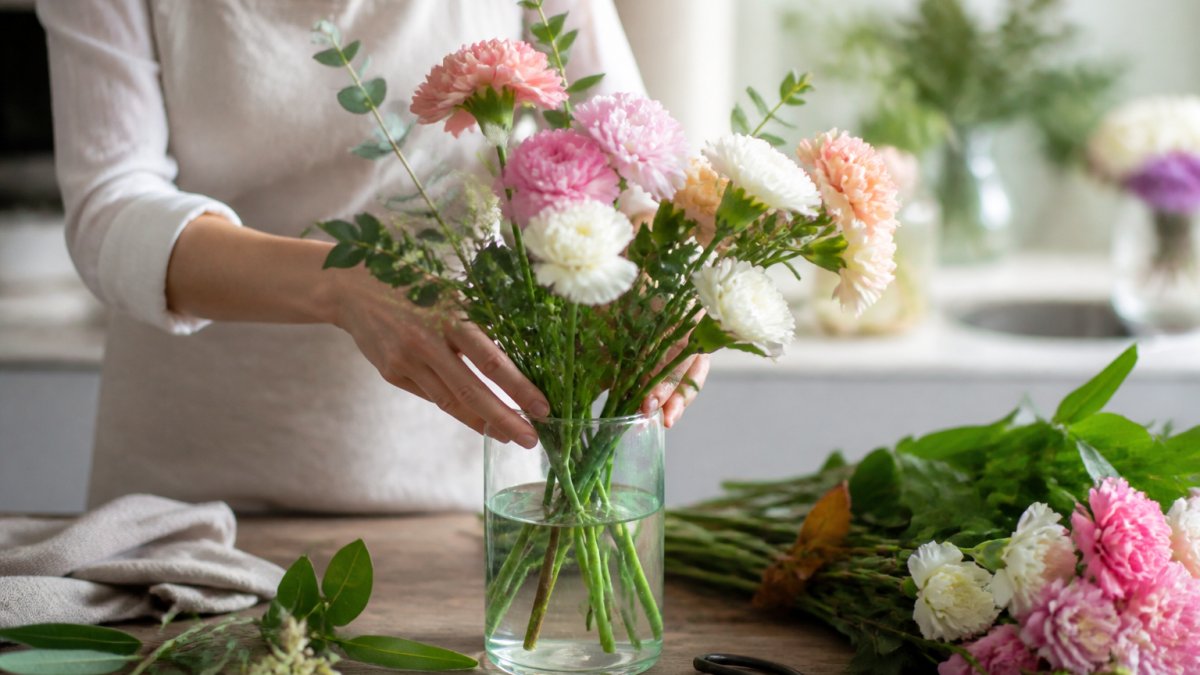
Place flowers in the vase with enough space between stems for water to circulate. Crowded arrangements trap bacteria and moisture. Space stems about one inch apart.
Fill the vase with cool water. The water level should reach about three-quarters up the vase. Flowers drink constantly, so check water level daily and top off as needed.
Arrange flowers at varying heights. This creates visual interest and ensures all stems reach water easily. Shorter stems in the center, taller ones on the outside, is a good starting point.
Best Flower Food for Fresh-Cut Flowers
Commercial flower food is a three-part formula, and understanding each part explains why most kitchen-counter substitutes fall short. The sugar (usually sucrose or dextrose) feeds the stem so blooms can open fully.
If your locally grown bouquet came with a packet, use it at the full label rate and mix it with cool water in a clean vase. Don't halve the packet to stretch it, underdosing the biocide is worse than using none, because you feed bacteria without controlling them.
If you have no packet, here is an honest ranking of the common substitutes:
- Plain cool water, changed every two days. The safest fallback. No sugar means no bacterial feast, and frequent changes do most of what flower food does. Most practitioners find this outperforms a badly mixed homemade recipe.
- A quarter-teaspoon of sugar per quart of water. Feeds the blooms but also feeds bacteria; only use it if you are willing to change the water daily. Never combine sugar with a dirty vase.
- A drop of unscented household bleach per quart. Controls bacteria but provides no nutrition. Useful for woody or hard-stemmed flowers that have plenty of stored energy, risky for delicate blooms.
- Sugar plus a drop of bleach. The closest home approximation to commercial food, but the margin between "helps" and "burns the stems" is narrow. Measure carefully and refresh every two days.
One more point specific to farm-grown stems: because locally grown flowers often arrive without the post-harvest conditioning that shipped blooms receive, the first packet matters more. Mix it fresh the day the flowers come home, and don't top off a half-empty vase with plain water, the biocide dilutes with every top-off. Empty, rinse, and remix instead.
university extension guidance on flower food and vase-life chemistry
How Long Do Cut Flowers Last
Most cut flowers last seven to fourteen days in a vase.
The exact timeline depends on flower variety, temperature, and care quality. Roses typically last ten to fourteen days. Tulips last seven to ten days.
Temperature is the biggest factor. Flowers in a cool room last significantly longer than flowers in warm spaces. A room at 65-70 degrees is ideal.
Locally grown seasonal flowers often outperform imported flowers because they haven't endured shipping stress.
How to Make Cut Flowers Last Longer
Keep Flowers Away from Heat and Direct Sunlight
Direct sunlight speeds up wilting. Place your arrangement in a spot with bright, indirect light. A windowsill with sheer curtains is perfect. Avoid south-facing windows that get intense afternoon sun.
Heat is even more damaging than light. Keep flowers away from radiators, heating vents, sunny windowsills, and warm appliances. A cool room extends vase life dramatically.
The ideal spot is cool, bright, and out of direct sun. A shelf in a north-facing room works well.
Avoid Drafts and Ripening Fruit
Drafts cause rapid water loss from petals. Keep arrangements away from open windows, fans, and air conditioning vents.
Ripening fruit releases ethylene gas, which causes flowers to fade and drop petals. Don't place your arrangement near a fruit bowl, banana, or apple. If you have fruit and flowers in the same room, move one of them.
This is especially important for locally grown flowers. They haven't been treated with ethylene blockers like shipped flowers sometimes are. Local blooms are more sensitive to this gas.
Revive Wilted Blooms
If flowers start to wilt, they're not necessarily finished. Wilting usually means dehydration, which you can reverse.
Remove the arrangement from the vase. Recut all stems at a fresh angle. Remove any leaves that have started to brown.
Place the flowers back in immediately. Within a few hours, many wilted blooms will perk up. The fresh water and clean stems restore hydration.
For severely wilted flowers, try the deep-water method.
Seasonal and Variety-Specific Care Tips
Generic advice treats every stem the same. Locally grown flowers don't behave that way, stem anatomy and harvest timing drive how a bloom should be handled in its first hours and over its vase life. Here is how to tailor care by stem type and season.
Match the cut to the stem anatomy
- Woody stems (lilac, hydrangea, flowering branches, roses with thick canes). These have dense tissue that resists water uptake. Recut at a sharp angle, then make a short vertical slit about half an inch up the stem end, or lightly crush the bottom inch with a clean hammer, to expose more drinking surface. Hydrangeas in particular benefit from being cut and immediately plunged into deep cool water.
- Hollow stems (daffodils, delphinium, amaryllis, calla lilies). Air pockets form easily. Cut under running water, keep the water level lower in the vase so the hollow stem doesn't fill and rot, and change water more often. Daffodils also exude a sap that harms other flowers, condition them in their own vase for a few hours before mixing.
- Delicate or thin stems (lisianthus, sweet peas, spray roses, ranunculus). These dehydrate fast and bruise easily. Use sharp snips, handle by the stem not the bloom, and keep them in shallow cool water. They reward daily water changes more than hardier stems do.
- Sap-heavy stems (poppies, euphorbia, poinsettia). Sear the cut end with a brief dip in boiling water for a few seconds, or hold it over a flame, to seal the sap and stop it from gumming up the water.
Adjust for harvest timing and season
Spring blooms like tulips and daffodils are cut cool and prefer cool water and a cool room; tulips continue to grow in the vase, so give them room and expect them to bend toward light.
Ask the grower or seller when the flowers were cut. A bouquet cut that morning needs only a fresh cut and clean water; one cut two days ago needs a deeper recut and a few hours of conditioning before it goes on display.
Frequently Asked Questions
How often should you change the water in a flower vase?
Change vase water every two to three days to prevent bacterial buildup and keep your cut flowers hydrated. When you change the water, rinse the vase thoroughly and recut the stems at an angle to help them absorb fresh water more efficiently. This simple maintenance step is one of the most effective ways to extend the vase life of your locally grown flowers and keep them looking vibrant.
What is the best flower food for fresh-cut flowers?
Commercial floral preservatives are designed to provide nutrients and prevent bacterial growth in vase water. If you don't have flower food on hand, some suggest homemade alternatives that combine sugar (to feed blooms) and a small amount of bleach (to inhibit bacteria). Always follow the package directions for commercial flower food, and add it when you first arrange your flowers and again when you change the water.
How long do cut flowers usually last?
Most cut flowers last between 5 to 14 days depending on the variety, how fresh they were at harvest, and how well you care for them. Locally grown flowers from Maryland farms are often harvested at peak ripeness and delivered quickly, which can actually extend their vase life compared to imported blooms that travel longer distances. Roses, carnations, and chrysanthemums tend to last longer, while tulips and lilies may fade sooner. Proper daily maintenance, regular water changes, and cool storage will help you get the maximum vase life from your arrangement.
Should you cut flower stems before putting them in a vase?
Yes, always recut stems at a 45-degree angle just before arranging your flowers. A fresh cut removes any seal that may have formed during transport and opens the stem to absorb water more efficiently. Cut about one inch from the bottom of each stem using sharp scissors or a floral knife. Recut the stems again every two to three days when you change the vase water to maintain hydration and prevent stem blockage from bacteria or decay.