 Ultimate guide
Tips for Ordering Event Floral Designs: A 2026 Guide
Table of Contents
- Define Your Event Vision and Guest Experience
- Conduct an Event Floral Design Consultation
- Create Your Event Floral Design Brief
- Plan Event Flower Budget and Prioritize Elements
- Select Seasonal Flowers for Events and Availability
- Match Floral Designs to Your Venue and Layout
- Build Your Ordering Timeline and Confirm Details
- Plan Delivery, Setup, and Contingency Logistics
- Frequently Asked Questions
Last Updated: October 14, 2026
Define Your Event Vision and Guest Experience
The foundation of any successful event floral design starts with clarity about what you want to create. Before reaching out to a florist, sit down and ask yourself: What atmosphere do you want guests to experience when they walk into the space?
This is where many people stumble. They think about flowers last, treating them as decoration rather than as a core part of the event's emotional design. But flowers set the tone. They shape how people feel the moment they arrive.
Consider the mood first. A funeral requires different flowers than a birthday celebration. A formal gala demands a different color palette and arrangement style than a casual garden party. An anniversary dinner needs intimacy; a corporate conference needs impact and professionalism.
Think about your guest count and how people will move through the space. Will guests be seated at tables for hours, or mingling and moving around?
At The Flower Cart, Inc., we find that clients who start by defining their vision end up with arrangements that feel intentional rather than generic.
Conduct an Event Floral Design Consultation
A professional event floral design consultation is where your vision becomes actionable. This is your chance to work with someone who understands both the artistic and logistical sides of event flowers.
During a consultation, a skilled floral designer will ask you specific questions: What's your event theme or style? Do you have inspiration images? What colors resonate with you? What's your timeline? What's your venue like?
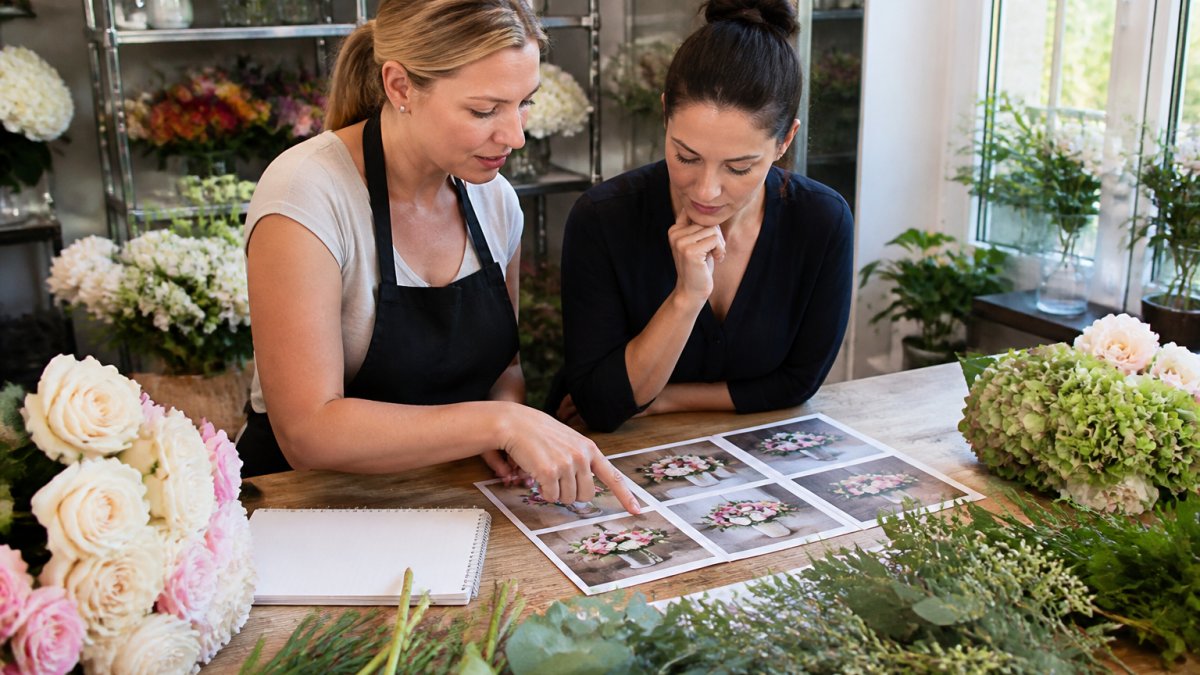
Bring reference images to your consultation. Pinterest boards, magazine clippings, photos from similar events you admire, these give the designer a visual language to work with. They can see whether you're drawn to romantic, garden-style arrangements or modern, architectural designs.
Be honest about your priorities and constraints. If budget is tight, say so. If you have a specific color you must avoid, mention it. If your venue has limited space or unusual access, that matters enormously.
Ask about the designer's experience with events similar to yours. Have they worked at your venue before? Do they understand the logistics of your specific event type?
Create Your Event Floral Design Brief
An event floral design brief is a document that captures everything you've discussed and decided.
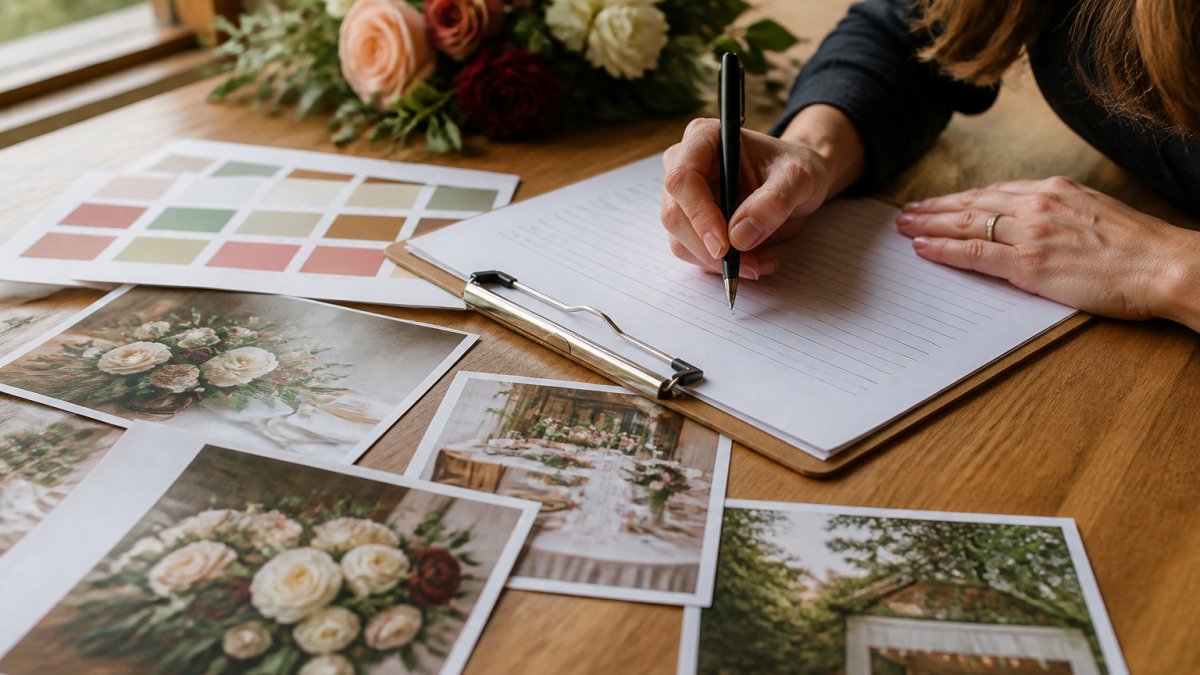
Your design brief should include:
Event details: Date, time, location, guest count, event type (wedding, memorial, corporate, birthday, etc.)
Design vision: The mood and atmosphere you want to create, your event theme, and the desired guest experience
Color palette: Your primary colors, accent colors, and any colors to avoid
Style preferences: Modern, romantic, garden-style, minimalist, dramatic, whatever resonates with you
Inspiration images: Photos of arrangements, color combinations, or overall aesthetics you love
Specific arrangements needed: Centerpieces for how many tables? Ceremony flowers? Entrance installations? Cocktail hour arrangements? Each piece should be listed with its location and purpose
Quantities and scale: How many arrangements, what size each should be, and how they'll be distributed through the space
Budget: Your total budget and how you'd like it allocated across different elements
Timeline and logistics: When you need designs finalized, when flowers should arrive, who handles setup, and any contingency plans
A written brief prevents misunderstandings. It gives the florist clarity. It gives you a reference point if questions come up later.
Plan Event Flower Budget and Prioritize Elements
Budget shapes every decision in event floral design. Before you commit to a florist, you need to know what you can spend and how you want to allocate that money.
Event flower budgets vary wildly depending on scale, complexity, and seasonal availability. Rather than guessing, ask your florist for a quote based on your specific event. They'll need to understand your vision, guest count, number of arrangements, and venue before they can give you accurate pricing.
Here's how to think about allocation: What's the most important visual moment? If it's the ceremony, invest there. If it's the reception tables where guests spend hours, prioritize centerpieces. If your venue is already beautiful, you might need less floral impact. If your space is plain, flowers carry more weight.
Common budget categories include:
- Ceremony flowers (arch, aisle markers, altar arrangements)
- Reception centerpieces (table arrangements)
- Entrance or cocktail hour installations
- Gift or thank-you arrangements
- Bride or guest-of-honor bouquets
- Greenery and filler elements
- Vessels, candles, and accessories
- Delivery and setup labor
Ask your florist which elements have the biggest visual impact per dollar. They can often suggest smart substitutions, using greenery more heavily, choosing focal flowers that are in season, or scaling back on certain arrangements, without compromising the overall design.
Select Seasonal Flowers for Events and Availability
Seasonal flowers for events are fresher, more abundant, and often more affordable than out-of-season blooms. They also tend to last longer because they're at their peak.
When you're ordering event floral designs, the season matters. Spring brings tulips, peonies, and ranunculus. Summer offers roses, dahlias, and garden roses. Fall brings chrysanthemums, sunflowers, and celosia. Winter features amaryllis, hypericum berries, and evergreen foliage.
Work with your florist to understand what's available during your event date. If you're set on a specific flower that won't be in season, expect higher costs and potential availability issues.
Ask about flower availability early. If your event is during peak season (late spring through early fall), your florist might have constraints on how many events they can take.
Locally-sourced blooms often have advantages. At The Flower Cart, Inc., we source seasonal flowers from Maryland farms whenever possible. Local flowers travel shorter distances, arrive fresher, and last longer in arrangements. They also support regional growers and the community.
Match Floral Designs to Your Venue and Layout
Your venue shapes everything about your floral design. The same arrangement that looks perfect in an intimate restaurant might disappear in a ballroom. A modern, architectural arrangement might clash with a historic mansion's aesthetic.
Visit your venue before finalizing your design. Take photos and measurements. Note the ceiling height, wall colors, flooring, natural light, and existing décor. Understand the event layout: where will guests enter? Where will they spend most of their time?
Share venue photos and measurements with your florist during your event floral design consultation. They need to see the space to design appropriately. A centerpiece that looks lush in a photo might overwhelm a small round table.
Ask about venue restrictions. Some venues prohibit certain flowers (allergens), have fire codes that limit candles in arrangements, or don't allow tape or nails on walls.
Discuss setup logistics with your florist and venue coordinator. Who has access to the space and when? How much time is available for setup? Are there loading areas, elevators, or back entrances?
Build Your Ordering Timeline and Confirm Details
Ordering event floral designs requires a timeline that works backward from your event date. Start early, not just for availability, but for thoughtful design and production.
Key Milestones for Event Floral Orders:
8-12 weeks before: Initial consultation and vision-setting. Discuss event details, style preferences, and budget.
6-8 weeks before: Finalize your design brief. Share venue photos, measurements, color palette, and inspiration images. Get a preliminary quote and design proposal from your florist.
4-6 weeks before: Confirm your design and budget.
2-3 weeks before: Final design confirmation. Review any renderings or mockups your florist provides. Confirm delivery time, setup location, and any last-minute details.
1 week before: Confirm all logistics. Verify delivery address, setup time, contact person on-site, and any special instructions. Finalize payment.
Day of event: Coordinate arrival time with your florist. Ensure someone is available to receive arrangements and direct placement.
This timeline prevents last-minute scrambling. It gives your florist time to source flowers, design thoughtfully, and produce your arrangements without rushing.
If your event is sooner than 8 weeks away, contact your florist immediately.
Plan Delivery, Setup, and Contingency Logistics
The final step in ordering event floral designs is planning how arrangements will arrive and be positioned. This is where many events stumble if details aren't confirmed.
Confirm delivery timing with your florist. Will flowers arrive the morning of the event, the day before, or at a specific time?
Discuss setup responsibility. Will your florist handle placement, or will you or a venue coordinator position arrangements?
Plan for contingencies. What happens if a specific flower isn't available? Have you and your florist discussed backup options? What if weather affects delivery (for outdoor events)? What if an arrangement gets damaged during transport?
For events with multiple arrangements, create a detailed setup sheet: which centerpiece goes on which table, where ceremony flowers are positioned, how cocktail hour arrangements are distributed. This prevents confusion and ensures consistency.
Ask about post-event arrangements. Can you keep centerpieces after the event? Do they need to be returned? Are there costs for extended arrangements or takedown?
Ordering event floral designs doesn't have to be overwhelming when you approach it systematically.
Frequently Asked Questions
How far in advance should I book tips for ordering event floral designs?
For most events, contact your florist 4-6 weeks ahead to secure availability and allow time for design consultation and planning. Larger events or peak seasons (spring weddings, holidays) may require 8-12 weeks' notice. Rush orders are sometimes possible with same-day or next-day delivery, but booking early ensures more flower choices and reduces stress. A professional event florist can advise on realistic timelines based on your specific event size and date.
What information should I give a florist when ordering event flowers?
Provide your event date, guest count, venue name and address, event type (wedding, corporate, memorial), desired color palette, style preference (modern, romantic, garden), budget range, delivery address, and setup access details. Include venue measurements if available, photos of the space, inspiration images, and any special requests (locally-sourced blooms, specific flowers to include or avoid, dietary restrictions for handlers). A written event floral design brief ensures clear communication and helps the florist create arrangements that match your vision.
How do I choose flowers that fit my event budget?
Start by deciding your total floral budget, then prioritize which areas matter most: focal arrangements, centerpieces, ceremony flowers, or installations. Seasonal flowers for events typically cost less than out-of-season imports. Work with your florist to allocate funds, for example, investing in statement pieces for the entrance and using simpler, budget-friendly arrangements for guest tables. Discuss substitutions and filler options that extend impact without inflating cost. A clear event flower budget planning conversation with your florist helps maximize visual impact within your spending limits.
What are the 3-5-8 rule and golden rule in floral design?
The 3-5-8 rule suggests using odd numbers of stems (3, 5, 7, or 9) in arrangements for visual balance and natural appeal. The golden rule in floral design emphasizes proportion: the height and width of arrangements should relate harmoniously to the space and surrounding elements. For event floral designs, these principles mean focal flowers should dominate, filler flowers support, and greenery creates texture, all scaled to your venue and guest experience. Your florist applies these design principles to ensure arrangements feel intentional and cohesive.
Can locally-sourced seasonal flowers for events last as long as imported blooms?
Yes. Locally-sourced, seasonal flowers often last longer because they travel shorter distances and reach you fresher. Maryland farm blooms used by local florists typically have a shorter supply chain than imported flowers, which spend days in transit. Freshness directly affects vase life, flowers harvested locally and arranged within days of harvest often outlast imported alternatives. Proper care (clean water, cool storage, stem conditioning) extends longevity regardless of origin. Choosing seasonal flowers for events supports local growers while delivering arrangements that stay vibrant throughout your celebration.
How do I know my event floral order will arrive on time and in good condition?
Work with a local florist offering same-day or next-day delivery in your area, and confirm delivery windows in writing. Discuss access to your venue (loading docks, elevators, restricted hours) and setup timing with the florist beforehand. Request a final confirmation call 24 hours before delivery. Ask about their care protocols during transport and how they handle contingencies (traffic delays, access issues). A professional event florist with local delivery capacity and established venue relationships ensures reliable, on-time arrival and proper handling of your floral arrangements.
What should I do if flowers aren't available when I order?
Discuss substitutions early in your event floral design consultation. Your florist can recommend seasonal alternatives that match your color palette and style if your first-choice flowers aren't available. Build flexibility into your design brief by suggesting 2-3 backup flower options. For events far in advance, availability is rarely an issue. For rush orders or peak seasons, have contingency options ready. A transparent florist will present substitution options upfront and ensure any changes maintain your desired aesthetic and guest experience.