 Ultimate guide
Choosing Professional Event Floral Designers: A Complete Guide
Quick Summary
Choose professional event floral designers by first confirming whether the vendor handles full design and installation or only florist work, then reviewing portfolios of similar events. Compare written quotes on one scorecard, and confirm the contract, deposit, and venue access window before paying.
- Confirm whether the professional covers design, delivery, setup, and breakdown, since florists and event designers are not always the same role.
- Ask which portfolio photos the designer personally created at events similar in size, venue type, and style.
- Score every vendor proposal on the same weighted criteria, such as design clarity, scope, and quote transparency.
- Confirm the deposit terms, design freeze date, substitution approval process, and liability insurance in writing before signing.
- Verify the load-in and teardown window for your specific date, since venues may shorten setup times when events overlap.
Table of Contents
- Choosing Professional Event Floral Designers: A Complete Guide
- Event Florist vs Event Designer: Knowing Who You Are Hiring
- Defining Your Event Vision, Theme, and Atmosphere
- Reviewing Portfolios and Asking the Right Questions
- Event Flower Budget and Pricing: What Drives the Cost
- A Side-by-Side Scorecard for Comparing Proposals
- Contracts, Logistics, and Venue Feasibility
- How Far in Advance to Book Your Event Florist
- Booking Your Event Florist With The Flower Cart, Inc.
- Frequently Asked Questions
Choosing Professional Event Floral Designers: A Complete Guide
Last Updated: November 12, 2026
Event Florist vs Event Designer: Knowing Who You Are Hiring
Choosing professional event floral designers starts with understanding who you are actually hiring. The Flower Cart, Inc. has served Baltimore since 1961. Many buyers assume a florist and an event designer are the same role, but they are not always interchangeable.
Before you sign anything, ask which of these responsibilities the professional covers.
The distinction matters most when your event is large or layered. A single centerpiece order rarely needs an event designer, while a full ceremony and reception often does.
Defining Your Event Vision, Theme, and Atmosphere
Start with the feeling you want guests to have when they walk in. Is the goal intimate and romantic, bold and celebratory, or calm and understated? Write that down before you look at any flower photos.
Give your designer a short brief that includes your event theme, your color palette, your venue, and your approximate guest count. Venue size and floor plan affect how many pieces you need and how large they should be.
Reviewing Portfolios and Asking the Right Questions
A portfolio tells you more than any description. Look for past events that resemble yours in size, venue type, and style, and ask whether the photos show finished work or staged inspiration shots. Ask the designer which of the pictures they actually created.
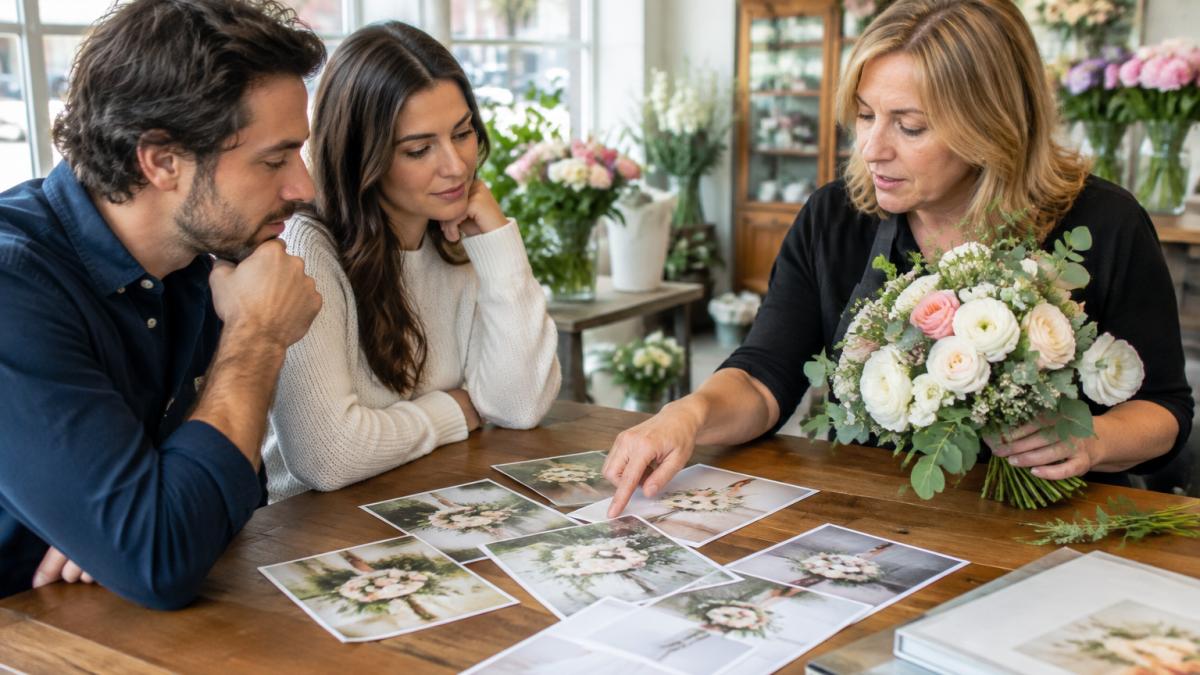
Useful questions include:
- Which of these events did you design end to end?
- How do you adapt a design when a flower is out of season?
- Can you show me a setup at a venue similar to mine?
- Who handles delivery, installation, and breakdown?
Consistent answers across these questions are a good sign. Vague answers are a reason to keep looking.
Event Flower Budget and Pricing: What Drives the Cost
Event floral pricing depends on quantity, flower varieties, the complexity of each arrangement, delivery distance, and the labor for setup and breakdown. Rentals such as vases, stands, and arches can add to the total. Because these factors vary so widely, the most reliable way to understand cost is to request a written quote based on your specific event. Learn why local flowers last longer than imported ones, which can affect how you weigh price.
For current pricing, check The Flower Cart, Inc.'s website or contact the shop directly for a quote tailored to your date and design. Seasonal flowers reflect what is available at your event date.
A Side-by-Side Scorecard for Comparing Proposals
A consistent scorecard forces every vendor onto the same criteria so style and price stop doing all the work.
Build a simple spreadsheet with one column per vendor and one row per criterion.
Suggested criteria and what a 5 looks like:
- Design concept clarity (weight: high for full-service events): The proposal names the palette, the arrangement types, approximate stem counts or piece dimensions, and how the design responds to the venue. A 1 is a folder of inspiration photos with no explanation.
- Portfolio relevance: The vendor shows at least two past events at a similar venue type, guest count, and style. Ask which photos they personally designed and installed. A 1 is a gallery of styled-shoot images with no event credits.
- Scope of service: Delivery, setup, installation labor, breakdown, and removal are itemized. A 1 is a line that says "floral package" with no breakdown.
- Quote transparency: Costs are separated into flowers, labor, rentals, delivery, and taxes or fees. A 1 is a single lump sum.
- Responsiveness and communication: Track how long each vendor takes to reply and whether they answer the actual question.
- Logistics plan: The proposal states load-in window, setup duration, crew size, and who coordinates with the venue. A 1 is silence on logistics.
- Contingency and substitution policy: The vendor explains what happens if a variety is unavailable and how substitutions are approved. A 1 is "subject to availability" with no process.
- Value alignment: Compare the total against the scope, not against the cheapest number. A lower quote that excludes setup labor is not cheaper once you add it back.
Weighting by event type. For a wedding or gala with installations, weight design concept, logistics, and contingency heavily. For a corporate luncheon with centerpieces only, weight quote transparency and responsiveness more, since the design risk is lower.
The scorecard below summarises how to rate each vendor proposal against the same criteria.
| Criterion | What a 5 looks like | Watch out for |
|---|---|---|
| Design concept clarity | Names palette, arrangement types, stem counts or dimensions | A folder of inspiration photos only |
| Portfolio relevance | Two or more similar past events the vendor designed | Styled-shoot images with no event credits |
| Scope of service | Delivery, setup, labor and breakdown itemized | A single "floral package" line |
| Quote transparency | Flowers, labor, rentals, delivery and fees separated | One lump-sum total |
| Responsiveness | Replies promptly and answers the actual question | Vague or slow replies |
| Logistics plan | Load-in window, setup duration, crew size stated | No mention of logistics |
| Contingency policy | Explains substitutions and how they are approved | "Subject to availability" with no process |
Contracts, Logistics, and Venue Feasibility
Read the contract and confirm the logistics plan before you pay a deposit.
Contract terms to confirm in writing:
- Deposit and payment schedule. Confirm the deposit amount, whether it is refundable, and the dates of interim and final payments. Ask what happens to payments already made if the event is postponed versus canceled.
- Change and final-count deadlines. Vendors typically need a firm guest count and a design freeze weeks before the event to order stems and schedule labor. Ask for the exact date after which changes incur fees or cannot be accommodated.
- Cancellation and postponement policy. Get the policy in writing, including whether a postponement carries the deposit forward and whether there is a rescheduling fee.
- Substitution and approval process. The contract should state how unavailable varieties are handled, who approves a substitute, and whether you get notified before or after the swap.
- Insurance and liability. Ask whether the vendor carries general liability insurance and whether the venue requires a certificate of insurance naming the venue. Confirm who is responsible for damage to venue property during installation and breakdown.
- Force majeure and weather. For outdoor events, confirm what happens if weather forces a move indoors or a cancellation, and who bears the cost of a redesigned setup.
Venue logistics to verify with both the venue and the designer:
- Access window. Confirm the earliest load-in time and the latest teardown time. A design that needs four hours of installation but only has a two-hour access window is not feasible as planned.
- Loading and elevators. Ask about dock height, freight elevator dimensions, door widths, and whether carts are required. Large installations and arches often fail at the elevator, not at the design table.
- Rigging and hanging permissions. Ceiling-hung pieces and chandeliers require venue approval and sometimes structural sign-off. Confirm who pulls the permit or approval and how far in advance.
- Power and water. Confirm outlet locations and whether the venue provides water access for conditioning flowers on site.
- Refrigeration and staging. Ask where flowers can be staged before the event and whether the venue offers a cool, secure room. Heat and direct sun shorten vase life fast.
- Teardown and removal. Confirm who removes rentals, stands, and debris, and by what time. Some venues charge the client for anything left behind.
- Coordination with venue staff. Ask who the designer's on-site contact is and whether the venue requires a walkthrough before the event date.
A practical pre-signature checklist. Before you sign, you should be able to answer: What is the deposit and is it refundable? What is the design freeze date? Who approves substitutions? Does the vendor carry liability insurance? What is the load-in and teardown window? Who is responsible for rigging approval?
Watch out: assuming the venue's standard access window applies to your event, venues often shorten setup times when another event is booked the same day, so confirm the window for your specific date rather than the venue's general policy.
How Far in Advance to Book Your Event Florist
Book early, especially for peak seasons and popular dates. Booking several months ahead is advisable for busy periods. For smaller events, a shorter lead time may be workable, but availability is never guaranteed.
Once you have a date and a rough budget, you can plan the design around what is in season. 2026 floral design trends and planning guidance
Booking Your Event Florist With The Flower Cart, Inc.
At The Flower Cart, Inc., we design event flowers with the same care we bring to sympathy and everyday orders. We source seasonal blooms from local Maryland farms, offer same-day delivery throughout Baltimore City and surrounding counties, and have served the community since 1961. Share your date, venue, and vision, and our team will help you build a design that fits your event. Get started with The Flower Cart, Inc. today. Thoughtful seasonal sourcing helps each arrangement feel rooted in its setting, and Charmed Valley Farm offers another perspective on choosing flowers that suit an event’s vision.
Frequently Asked Questions
What is the difference between a florist and an event designer?
A florist focuses on creating and supplying flowers, including arrangements, bouquets, and installations. An event designer plans the overall visual look of an event, which may include lighting, rentals, linens, and layout as well as flowers. Some professionals do both, but the roles are not always the same. When hiring, ask whether the person will design only the floral pieces or coordinate the broader event look, and confirm who handles setup and breakdown.
How far in advance should I book an event floral designer?
Book as early as you can, especially for peak seasons such as spring weddings, holidays, and June through October. Booking several months ahead is advisable for busy periods. Smaller, simpler events may be booked with less lead time, but availability for specific blooms and dates can tighten quickly. Ask any designer how far out their calendar is booked before you commit.
What should I look for when choosing an event floral designer?
Review portfolios for work similar to your event in size, style, and venue type. Confirm that the designer can explain their design process, provide a detailed written proposal, and describe how they source flowers. Check that the proposal covers delivery, setup, breakdown, and what happens if a flower is unavailable. Clear communication and a designer who asks about your vision, guest count, and venue are strong signs of a good fit.
How do I compare event floral design proposals?
Line up proposals side by side and check that each one lists the same items, such as arrangement types, quantities, flower varieties, delivery, setup, and labor. A lower total price may exclude delivery or rentals, so compare the scope along with the cost. Use a simple scorecard that rates portfolio fit, communication, clarity of the proposal, and included services. This makes trade-offs easier to see.
What questions should I ask a floral designer before booking?
Ask about their experience with events like yours, how they handle flower substitutions, and what their cancellation and payment terms are. Confirm the deposit amount, the balance due date, and whether there is a contingency plan for weather or supply delays. Ask who will be on site during setup and breakdown and whether they can work within your venue's rules. Get all answers in writing before you sign.
How do professional floral designers price event work?
Pricing depends on quantity, design complexity, flower selection, delivery distance, labor for setup and breakdown, and any rentals such as vases, stands, or containers. Seasonal availability and event date can also affect cost. Because these factors vary, request a written quote based on your specific event details. The Flower Cart, Inc. provides pricing based on your order, so contact the shop or visit its website for a current quote.