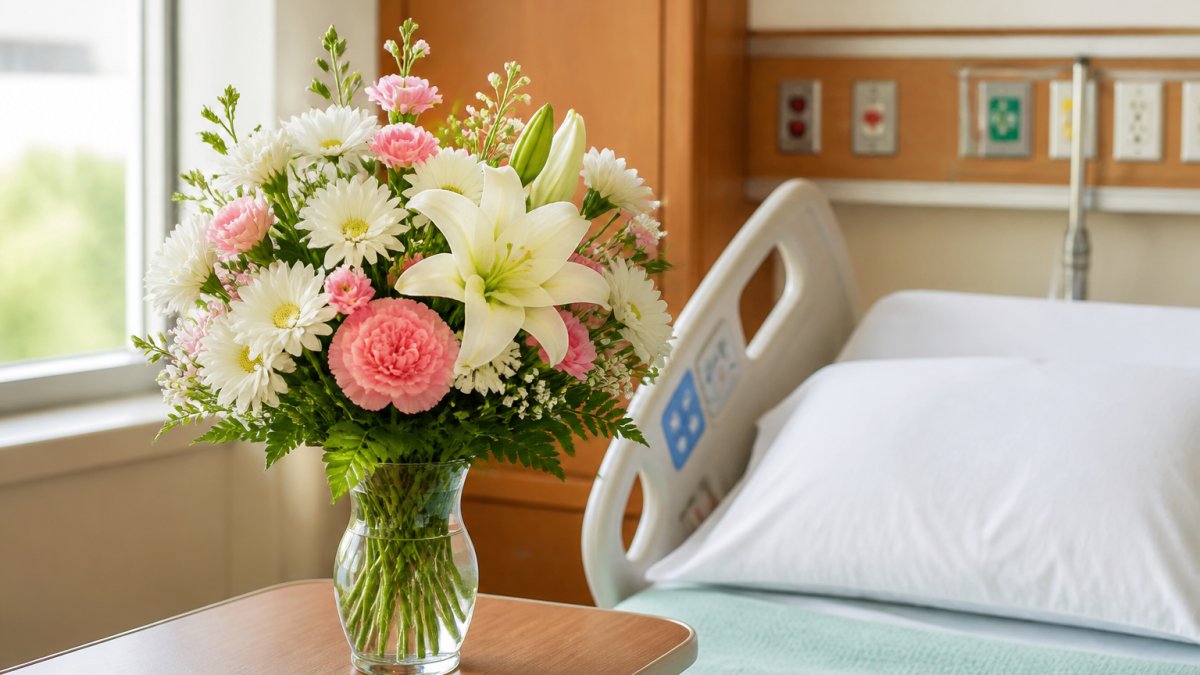
 How-to
How to Order Hospital Appropriate Flowers
Table of Contents
- Verify Hospital Flower Delivery Rules Before You Order
- Select the Best Flowers for a Hospital Room
- Choose a Compact, Bedside-Friendly Arrangement
- Complete Your Hospital Flower Delivery to Patient Room
- Write a Meaningful Get Well Soon Card Message for Hospital Patient
- What to Do When Flowers Are Prohibited
- Ensure Successful Delivery and Prevent Common Issues
- Frequently Asked Questions
Last Updated: October 18, 2026
Verify Hospital Flower Delivery Rules Before You Order
Before you select hospital appropriate flowers or place an order, confirm the policy for the specific ward, not just the hospital. A medical center's main gift-shop policy and a floor nurse's policy can differ, and the floor wins. Policies vary by hospital, by unit, and even by the patient's current condition, so a single call to the main number is rarely enough.
Contact the hospital directly for ward-specific restrictions
Call the hospital's main number and ask for the patient's floor or unit. Then ask to speak with the unit's charge nurse or the nursing station, that is the person who actually enforces the rule at the door. Have the patient's full name and room number ready, and ask these questions in this order:
- Are flowers permitted on this unit right now?
- Are there fragrance or pollen restrictions?
- Must arrangements arrive in hospital-approved or disposable containers?
- Are there specific flowers or plants to avoid?
- What are the delivery hours, and where should the driver check in?
Write down the name and title of the person who answers, plus the date and time. If a delivery is later refused, you have documentation of what you were told. A common pattern is that the front desk says "flowers are fine" while the unit says "not on this floor", the unit's answer is the one that matters.
Check for patient-specific allergies or health conditions
Ask the patient or a family member directly about allergies before ordering. Some patients have severe pollen allergies; others have respiratory conditions that make strong scents problematic. Don't assume, ask specifically:
- Do you have any flower or pollen allergies?
- Are you sensitive to strong scents?
- Do you have breathing difficulties?
- Are there flowers you dislike?
This conversation takes two minutes and prevents sending something the patient can't enjoy. If the patient cannot be reached, ask the family member who is coordinating their care.
Know when the answer is likely to be no
Some units prohibit flowers as a standing rule, not a case-by-case decision. Intensive care, transplant, oncology, and other immunocompromised units commonly restrict or ban fresh flowers and potted plants because soil and standing water can harbor bacteria and mold. If the charge nurse says no, do not send flowers anyway hoping for an exception, the delivery will be turned away at the desk, and the patient may never see them.
Select the Best Flowers for a Hospital Room
Hospital appropriate flowers are cheerful, long-lasting, and low-maintenance. They brighten a patient's space without creating medical complications. The best choices are bright and uplifting while being practical for a small bedside area.
Think compact and contained. Hospital rooms are tight. A six-foot arrangement won't fit. A small, neat bouquet in a secure vase works perfectly.
Choose low-scent and fragrance-free blooms
Strong perfume from flowers can trigger headaches, allergies, or nausea in patients. Fragrance-free varieties are safer. If you want scent, choose flowers with very mild fragrance only.
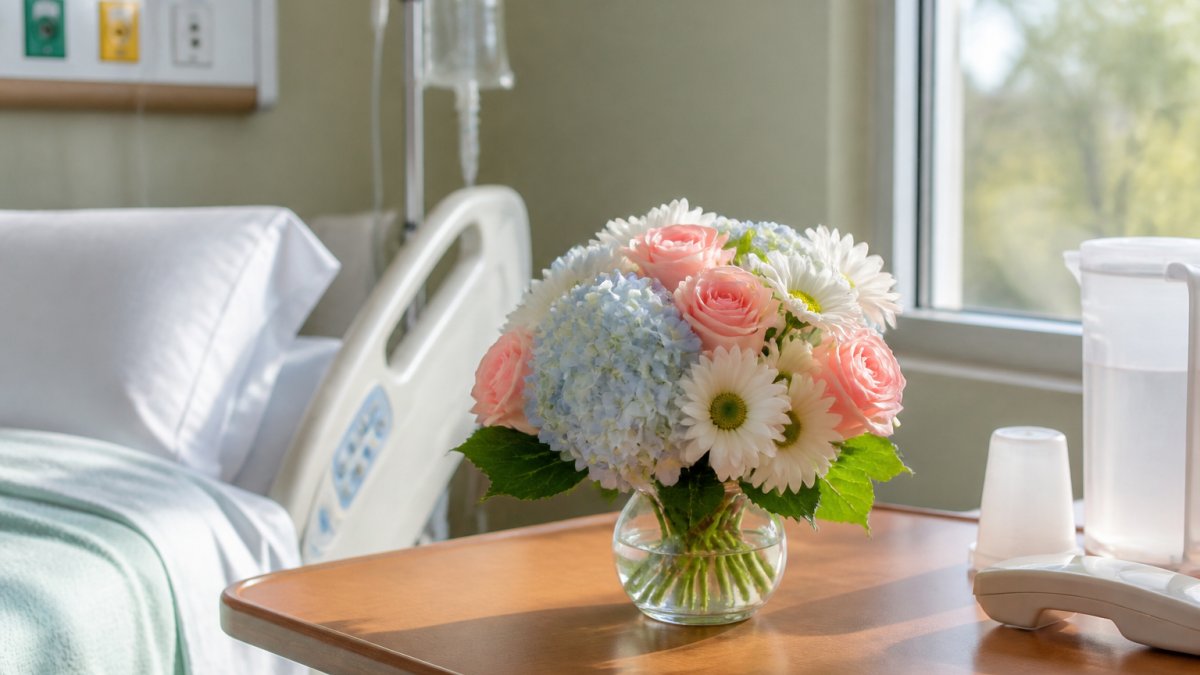
Best low-scent options:
- Roses (most are fragrance-free or lightly scented)
- Hydrangeas (virtually no scent)
- Carnations (minimal fragrance)
- Gerbera daisies (no scent)
- Chrysanthemums (little to no fragrance)
Avoid heavily scented flowers like lilies, gardenias, and tuberose. Even one stem of a heavily perfumed lily can fill a small hospital room with overwhelming fragrance that bothers the patient and nearby visitors.
Pick long-lasting, hypoallergenic varieties
Hospital stays can last days or weeks. Flowers that wilt in two days disappoint the patient. Choose varieties known for longevity.
Hypoallergenic flowers produce less pollen, making them safer for patients with allergies or respiratory issues.
When ordering, ask the florist which varieties are lowest-pollen and longest-lasting. At The Flower Cart, Inc., we source seasonal blooms from local Maryland farms.
Choose a Compact, Bedside-Friendly Arrangement
Size matters in a hospital room. A large arrangement blocks the patient's view or takes up space needed for medical equipment.
Request a small to medium arrangement, typically 8-12 inches tall. Ask the florist to use a low, wide vase rather than a tall, narrow one.
Avoid arrangements that require special care or frequent watering. Hospital patients can't always change water or rotate flowers.
Complete Your Hospital Flower Delivery to Patient Room
Getting the order details right prevents delivery failures. Hospitals are large, confusing places. Delivery drivers get lost. Flowers end up at the wrong floor or the wrong patient's room without accurate information.
Provide accurate patient and delivery information
When placing your hospital flower delivery order, provide complete details:
- Patient's full name (first and last)
- Hospital name and location
- Patient's room number
- Patient's floor or ward
- Best delivery date and time window
Double-check the room number. A single digit error sends flowers to the wrong patient. Call the hospital again if you're unsure.
Specify that this is a hospital delivery. Many florists have experience with hospital flower delivery to patient rooms and know the procedures, restricted areas, and timing that works best for medical centers.
Specify delivery timing and special instructions
Request delivery during visiting hours, typically mid-morning or early afternoon. Avoid very early morning or late evening when staff is busy with medical procedures.
Include a note with special instructions:
- "Please leave at front desk if patient is not in room"
- "Call patient's room before delivering"
- "Do not leave unattended in hallway"
- "Deliver to bedside only"
These instructions help the florist navigate hospital procedures and ensure flowers reach the patient safely.
Write a Meaningful Get Well Soon Card Message for Hospital Patient
A card with a get well soon message transforms flowers into a personal gesture. Keep the message brief, warm, and encouraging. Hospital patients appreciate genuine warmth without overwhelming emotion.
Good messages:
- "Thinking of you and wishing you a speedy recovery. Can't wait to see you soon."
- "Sending love and strength your way. You've got this."
- "Rooting for you every day. Get well soon."
- "We're all thinking of you. Rest up and feel better."
Avoid messages that are too heavy or assume outcomes:
- Don't say "I know you'll be fine" if you don't know the prognosis
- Don't make it about yourself ("I miss you so much")
- Don't be overly cheerful in a way that feels dismissive of their situation
Keep it to 2-3 sentences. Sign your name clearly. The card should feel personal but not burdensome.
What to Do When Flowers Are Prohibited
Some hospital wards don't allow flowers at all. Intensive care units, transplant wards, and immunocompromised patient areas often have strict no-flower policies.
Instead, consider alternatives that brighten a patient's room:
- Potted orchids or small plants (check if plants are allowed)
- Balloons (confirm hospital policy first)
- Fresh fruit baskets
- Chocolates or treats the patient can enjoy
- A heartfelt card or letter
- A book, magazine, or audiobook gift card
Call ahead to ask what's allowed. Many hospitals have gift shops where you can purchase approved items.
The gesture matters more than the specific gift. A patient in a restricted ward appreciates knowing someone cared enough to find an alternative.
Ensure Successful Delivery and Prevent Common Issues
Hospital flower delivery fails for predictable reasons, and almost all of them can be caught with a short confirmation sequence. Work through these steps in order.
Confirm the order the day before and the morning of delivery
Call the hospital the day before delivery and again the morning of delivery to confirm three things: the patient is still admitted, the room number is unchanged, and flowers are still permitted on that unit. Patients are moved between rooms and units frequently, and a room number that was correct yesterday can be wrong today. A quick call the morning of delivery catches last-minute changes before the driver leaves.
Give the florist a delivery brief, not just an address
Provide the florist with a short written brief that includes:
- Patient's full name (first and last) and room number
- Hospital name, street address, and the specific entrance the driver should use
- The unit or floor name, not just a number
- Delivery window that matches the unit's visiting hours
- Where to check in (front desk, security desk, or nursing station)
- A callback number for the person who placed the order
Ask the florist to confirm receipt of the brief. A florist who has delivered to the hospital before will recognize the entrance and check-in procedure; one who hasn't may need the extra detail.
Plan for the patient being discharged
Discharge timing is the most common reason a hospital delivery fails. If the patient may go home before the delivery date, ask the florist in advance whether the order can be redirected to the patient's home address, and confirm the cutoff time for changing the delivery address. Some florists will hold the arrangement and redeliver; others will not. Settle this before you order, not after the driver is already at the hospital.
Prevent the other common failures
- Wrong room number: Double-check the room number with the hospital the morning of delivery, not just when you order.
- Delivery during restricted times: Ask the unit for the best delivery window; avoid shift change and procedure times.
- Florist unfamiliar with hospital procedures: Choose a florist who has delivered to the hospital before, or give them the check-in details in the brief above.
- Flowers rejected at the entrance: Some hospitals screen all deliveries. Confirm the check-in point and provide complete information so the driver knows what to expect.
- No one to receive the arrangement: Ask the florist to call the patient's room before delivering, and specify whether the arrangement may be left at the nursing station if the patient is unavailable.
Before ordering, confirm:
- The patient is still admitted
- The room number is correct
- The hospital allows flowers on that unit
- The delivery time works with the unit's visiting hours
- The florist knows how to access the patient's floor and where to check in
- The redelivery policy is settled in case of discharge
A quick phone call to the hospital the morning of delivery can catch last-minute changes and is the single most effective step to prevent a failed delivery.
Frequently Asked Questions
Can you have flowers delivered to a hospital?
Yes, most hospitals accept flower deliveries, but restrictions vary by facility and ward. Intensive care units, surgical recovery areas, and immunocompromised patient units typically prohibit flowers due to infection control protocols. Always contact the hospital directly or ask the patient's care team before ordering. Many hospitals have specific hours for flower delivery and may require flowers to be left at the reception desk rather than brought directly to the patient room.
What information do I need to provide when ordering hospital flowers?
You'll need the patient's full name, hospital name, room number, and the patient's unit or ward. Include the patient's phone number if available so the hospital can notify them of delivery. Specify your preferred delivery date and time window. Provide delivery instructions such as 'leave at reception desk' or 'deliver to room if permitted.' Include a card message and your contact information. Accurate details prevent delivery delays and ensure flowers reach the correct patient.
What are the best flowers for a hospital room?
Choose long-lasting, low-scent or fragrance-free blooms like roses, hydrangeas, carnations, chrysanthemums, gerbera daisies, and coneflowers. Avoid heavily scented flowers, which can trigger nausea or allergies in recovering patients. Select bright, cheerful colors to lift spirits. Hypoallergenic varieties minimize pollen exposure. Compact arrangements work best in hospital rooms where space is limited. Ask your florist about the patient's preferences and any known allergies before finalizing your choice.
What should I write on a get well soon card with hospital flowers?
Keep your message brief, uplifting, and genuine. Examples: 'Thinking of you and sending strength for a speedy recovery,' 'Wishing you healing and brighter days ahead,' or 'You're in our thoughts during this time.' Avoid mentioning the severity of the illness or making assumptions about recovery timelines. Include your name so the patient knows who sent the flowers. A heartfelt, simple message often means more than lengthy text. Personalize it based on your relationship with the patient.